 EN
EN

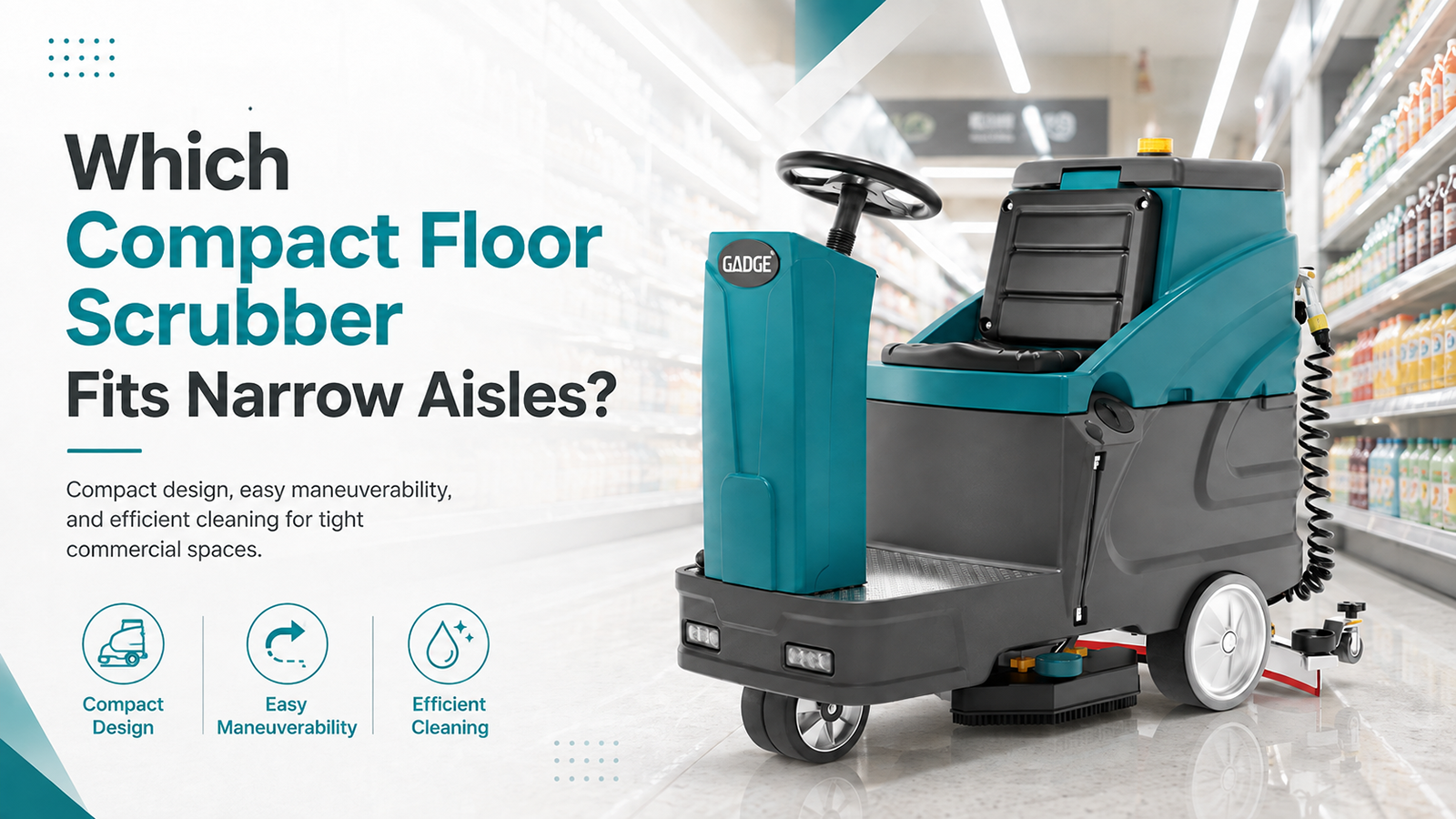
Assessing Maneuverability Dimensions in Confined Layouts
Working within restricted facility layouts demands a thorough understanding of overall machine footprints and turning radiuses. A traditional walk-behind floor cleaning unit often struggles when operators attempt sharp turns between storage racks or checkout counters. A true compact floor scrubber is purposefully engineered with an optimized chassis design and shortened wheelbase allowing personnel to pivot smoothly around tight corners. When reviewing equipment specifications facility teams should examine the squeegee width relative to the main scrub deck because a trailing squeegee that extends too far beyond the machine body can catch on shelving uprights during tight turns. Selecting models where the rear squeegee pivots closely within the cleaning path minimizes accidental corner impacts and protects both facility infrastructure and internal components from premature wear
Balancing Solution Tank Capacity and Overall Weight
A common engineering compromise in space-saving cleaning units involves balancing water reservoir volume with total equipment weight. Industrial environments demand sufficient liquid capacity to cover extended floor areas without requiring constant refilling trips to utility stations. However excessive water weight compromises maneuverability and makes physical handling fatiguing for operators navigating inclines or ramps. Modern compact floor scrubber models address this balance through efficient fluid delivery systems that optimize water distribution across the scrubbing pad. By regulating solution flow rates precisely according to floor soil levels these machines maximize runtime per tankful while keeping total operating weight well within ergonomic thresholds for daily operator use
Evaluating Power Source Reliability and Battery Runtime
Reliable power supply directly impacts daily cleaning productivity especially in multi-shift warehousing and logistics operations. Corded electrical machines offer continuous runtime but present severe tripping hazards and limited reach when navigating congested aisles filled with inventory carts and packaging materials. Consequently battery-powered configurations represent the gold standard for dynamic commercial environments. Lithium-ion and advanced AGM battery systems deliver consistent voltage output throughout the discharge cycle ensuring that brush motor rotation speed and vacuum suction power remain stable from start to finish. Facility supervisors must evaluate charging infrastructure availability and shift length requirements to match battery capacity specifications accurately with daily cleaning schedules preventing unexpected mid-shift operational halts
Optimizing Down Pressure and Brush Mechanics for Diverse Flooring
Different flooring materials ranging from polished concrete in distribution centers to resilient vinyl tiles in retail showrooms require adaptable mechanical scrubbing action. Achieving effective soil removal in narrow spaces without damaging surface finishes depends heavily on brush pressure regulation and head design. A high-performance compact floor scrubber utilizes adjustable mechanical down pressure or spring-loaded deck suspension to maintain uniform contact across uneven expansion joints and surface irregularities. Whether equipped with cylindrical brushes for sweeping loose debris simultaneously or disc pads for deep stain agitation selecting the appropriate tooling configuration guarantees thorough cleaning results while preserving the underlying floor substrate integrity over years of continuous service
Implementing Ergonomic Controls for Operator Safety
Operational safety and user fatigue management are paramount considerations when deploying maintenance equipment in busy environments. Maneuvering cleaning machinery through confined corridors requires continuous focus from the operator making intuitive control layouts and comfortable handle configurations essential. Equipment featuring simplified dashboard interfaces adjustable steering columns and immediate emergency stop mechanisms empowers staff to operate machinery confidently without extensive technical training. Furthermore low operational noise emissions enable daytime cleaning in noise-sensitive settings such as healthcare facilities and educational institutions without causing disruption to occupants or staff members
