 EN
EN

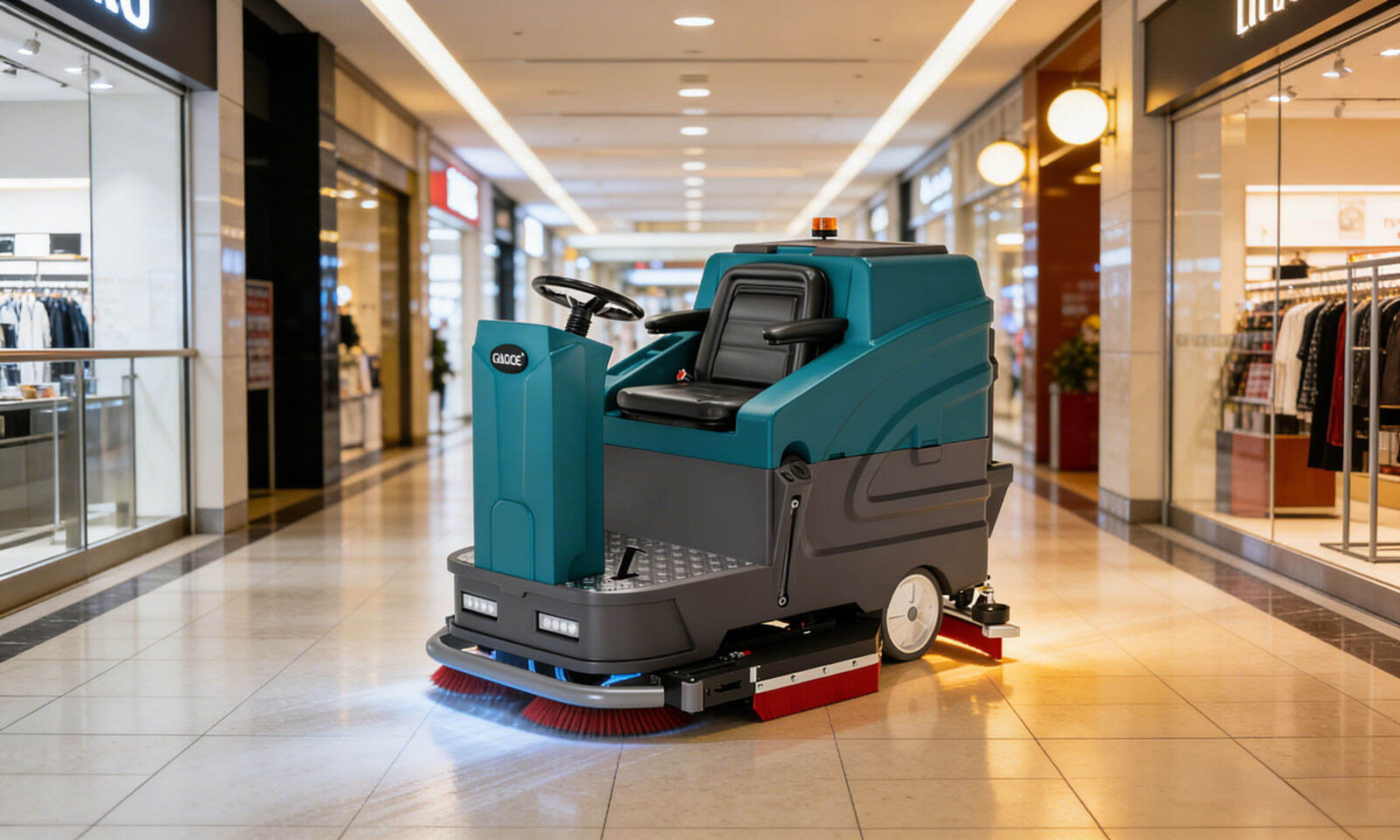
What Defines High Work Efficiency in a Floor Cleaning Machine?
Cleaning Path Width, Coverage Rate (sq ft/hr), and Consistency Metrics
High work efficiency in a floor cleaning machine is defined by three interdependent metrics: cleaning path width, coverage rate (measured in sq ft/hr), and consistency of soil removal and drying. Wider paths—typically 20–30 inches in walk-behind units and 40–60 inches in ride-on models—directly increase hourly coverage, with industrial scrubbers achieving 30,000–50,000 sq ft/hr. But speed alone is insufficient: consistency in brush pressure, solution distribution, and squeegee contact ensures uniform results and eliminates rework. Facility management studies show machines with engineered brush systems reduce missed spots by 40% versus manual mopping—cutting downtime, labor costs, and quality-related callbacks.
Time Savings vs. Manual Mopping: Quantifying Real-World Gains of 50–70%
Modern floor scrubbers deliver 50–70% faster cleaning than manual mopping—a gain validated across commercial, healthcare, and industrial settings. For example, a 10,000 sq ft warehouse takes ~4 hours to clean manually but only 1.5 hours with a ride-on scrubber. This advantage stems from integrated engineering: auto-dosing reduces chemical waste by 25%, while lithium-ion batteries support uninterrupted 4–6 hour runtimes. As a result, facilities routinely redeploy staff to higher-value tasks—improving overall productivity without increasing headcount.
Floor Cleaning Machine Types Compared by Efficiency Performance
Walk-Behind Scrubber Dryers: Balanced Speed and Control for Mid-Sized Facilities
Walk-behind scrubber dryers strike the optimal balance of speed, maneuverability, and operator control for facilities under 50,000 sq ft. With cleaning paths of 20–30 inches, they achieve 15,000–25,000 sq ft/hour—enough to navigate narrow retail aisles or school corridors without sacrificing edge cleaning near displays or fixtures. Their consistent brush pressure (15–25 psi) prevents streaking and ensures uniform soil removal. In schools and hospitals—where rapid turnover in high-traffic zones is critical—these units deliver 50% faster cleaning than manual methods. Ergonomic handle design further sustains operator performance across full shifts.
Ride-On Scrubber Dryers: Maximum Throughput for Warehouses and Airports
Ride-on scrubber dryers are purpose-built for large-scale environments exceeding 100,000 sq ft. Their 40–60 inch cleaning paths enable throughput of 30,000–50,000 sq ft/hour—the highest among conventional scrubbers. Integrated features like 50–100 gallon solution tanks, dual-brush systems, and high-efficiency squeegee vacuums eliminate refill stops and maintain >90% dry-time consistency on concrete—essential for safety-critical spaces like airport terminals and distribution centers. Operators cover ground three times faster than with walk-behind units, delivering up to 70% labor reduction per square foot versus manual cleaning, according to benchmark data from the International Sanitary Supply Association (ISSA).
Robotic Floor Cleaning Machines: Autonomous Operation with Setup Trade-Offs
Robotic floor cleaning machines leverage LiDAR mapping and programmable routes to operate autonomously overnight in office complexes, malls, and lobbies. Though their 18–24 inch cleaning paths limit raw throughput (10,000–15,000 sq ft/hour), they eliminate direct labor during off-peak hours—delivering 80% consistency in routine cleaning. Success depends on environmental predictability: initial setup requires digital floorplan upload and no-go zone programming (typically 8–12 hours per facility). Once calibrated, robots reduce operator dependency significantly—but still require human intervention for unplanned spills or dynamic obstacles. Their efficiency peaks where layouts are static and traffic patterns are repeatable.
Critical Technical Features That Boost Floor Cleaning Machine Efficiency
Battery Runtime, Solution Tank Capacity, and Brush System Design
Three technical pillars govern real-world efficiency: battery runtime, solution tank capacity, and brush system engineering. Lithium-ion batteries delivering 4–6 hours of continuous operation allow crews to clean 30–50% more area per shift than legacy lead-acid models. Tanks exceeding 30 gallons support uninterrupted cleaning of 15,000+ sq ft—eliminating mid-shift refills. Meanwhile, brush systems designed for adjustable pressure (15–25 psi) and multi-surface compatibility maximize scrubbing efficacy without compromising coverage speed. Facilities deploying machines with all three features report 40% faster completion times versus manual methods—and sustain those gains over extended equipment lifespans.
Automation Level (e.g., LiDAR Navigation, Auto-Dosing) and Operator Dependency
Automation directly reduces labor intensity while elevating consistency. LiDAR navigation enables precise, overlap-free route planning—cutting wasted movement by 25% in open-floor warehouses. Auto-dosing systems meter chemicals to within ±5% tolerance, reducing consumption by 20% while preserving cleaning performance and extending brush life. When combined with fleet management software, these capabilities allow semi-autonomous operation: staff monitor progress remotely and intervene only when needed. The result? Facilities using high-automation scrubbers require 50% fewer labor hours per 10,000 sq ft compared to manually controlled units—validated by ISSA’s 2023 Operational Benchmark Report.
How to Maximize Real-World Efficiency of Your Floor Cleaning Machine
Achieving peak efficiency demands disciplined maintenance and intentional operational practices—not just advanced hardware. Start with daily routines: rinse solution and recovery tanks thoroughly, inspect brushes and pads for wear, and fully recharge batteries after each shift. These simple steps reduce unplanned downtime by up to 40%, according to ISSA field data. Weekly maintenance—including filter replacement, belt tension checks, and wheel lubrication—preserves consistent cleaning performance and extends service intervals.
Operational discipline amplifies hardware capability:
- Conduct pre-shift surface inspections to clear debris or obstacles that impede autonomous or high-speed operation
- Use overlapping elliptical cleaning paths instead of linear back-and-forth passes—boosting effective coverage by 15–25%
- Calibrate chemical dosing systems monthly to prevent overuse, which degrades brushes and leaves residue
- Train operators to modulate machine speed based on soil load: slower for heavy grime, faster for light maintenance
Strategic scheduling further compounds gains—prioritize high-traffic zones during off-peak hours and assign robotic units to overnight, repetitive tasks. Facilities implementing this integrated approach report 50–70% faster cleaning cycles and 30% longer equipment lifespans versus reactive maintenance models.
FAQ
Q: What factors define high work efficiency in a floor cleaning machine?
A: High work efficiency is defined by cleaning path width, coverage rate (sq ft/hour), and consistency metrics—ensuring uniform soil removal and drying.
Q: How much faster are modern floor scrubbers compared to manual mopping?
A: Modern floor scrubbers deliver 50–70% faster cleaning than manual mopping, supported by features like auto-dosing and lithium-ion batteries.
Q: Which floor cleaning machine is ideal for mid-sized facilities?
A: Walk-behind scrubber dryers are optimal for mid-sized facilities under 50,000 sq ft due to their balance of speed and maneuverability.
Q: What are the advantages of ride-on scrubber dryers?
A: Ride-on scrubber dryers cover 30,000–50,000 sq ft/hour and reduce labor by up to 70%, making them ideal for large-scale environments like warehouses and airports.
Q: How do robotic floor cleaning machines work?
A: Robotic machines use LiDAR mapping and programmable routes to clean autonomously, though they need initial setup and human intervention for dynamic obstacles.
Q: What maintenance practices increase the efficiency of floor cleaning machines?
A: Regularly rinsing tanks, inspecting brushes, and calibrating chemical dosing systems significantly enhance efficiency and extend equipment life.
