 EN
EN

Understanding Mall-Specific Cleaning Challenges
High-Traffic Debris Profile: Dust, Food Waste, and Foot Traffic Load
Shopping malls accumulate a unique mix of trash because of all the people walking through them every day—some places see over 20k visitors according to ICSC data from last year. All those feet track in dust, tiny particles, and even microplastics from shoes. The situation gets worse around food courts where spilled grease, crushed snack wrappers, and sticky drink leftovers make surfaces slippery and wear down floors faster than anywhere else. Cleaning crews need special equipment to handle this mess since regular sweepers just aren't built for dealing with such varied materials. Most standard machines can't suck up everything properly or adjust their brushes to tackle different types of debris at once.
Layout Complexity: Aisles, Food Courts, Entrances, and Mixed Flooring Zones
The layout of shopping malls creates all sorts of tricky cleaning situations. Think about those tight spaces between stores where vendors set up their little shops, or the greasy messes that build up in food courts after lunch rushes, not to mention the damp areas near entrances where water tends to collect. Cleaning crews deal with constant changes in floor materials too. One moment they're working on shiny concrete, then switching to carpet squares, followed by terrazzo patches and finally surfaces somewhere else. According to some research from facility managers, when there are five different floor types in a single area, it takes about 40% longer to clean than if everything was just one consistent surface. That's why having versatile sweepers that can adjust pressure settings and contain debris properly becomes so important for keeping these complex environments looking good without wasting time or resources.
Selecting the Optimal Floor Sweeper Type for Mall Operations
Ride-On vs. Walk-Behind Floor Sweepers: Scalability and Staff Efficiency
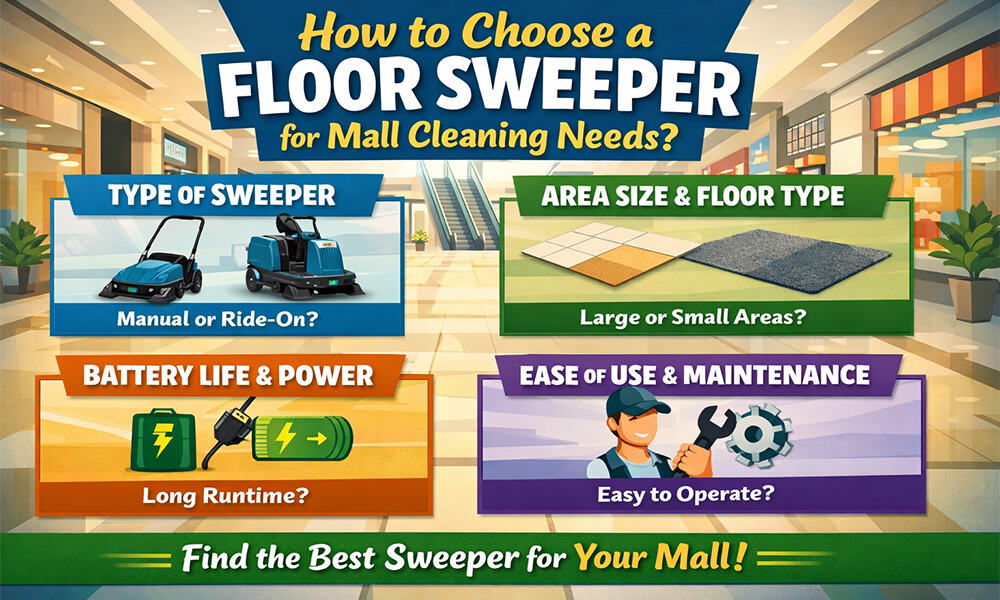
When deciding between ride-on and walk-behind sweepers, facility managers need to consider several factors including space size, building layout, and workforce planning. Ride-on machines work best in big open spaces such as airport terminals or shopping mall atriums. According to ISSA data from 2023, these can clean upwards of 30,000 square feet per hour which really helps reduce worker tiredness when they're stuck cleaning all day long. Walk behind sweepers have their own advantages though, especially in tight spots like food court areas, narrow store passageways, and around things that can't be moved. They allow cleaners to get into those tricky corners where bigger equipment just won't fit. For busy shopping centers with half a million people walking through every day, switching to ride-on sweepers can slash overall cleaning time by about forty percent compared to traditional walk behind models. The catch is that corridors need to be at least six feet wide so operators can actually drive them safely without getting stuck between displays or obstacles.
Robotic Floor Sweepers for Supplemental Night Cleaning and Labor Optimization
Robot floor sweepers are becoming a smart fix for overnight cleaning when staff is limited. These self-driving machines can navigate through complicated spaces with multiple levels such as large atrium areas, around escalators, and along the edges of food courts to pick up small particles that often get overlooked during regular business hours. According to Facility Management Journal from 2023, these robots handle about 70 percent of the cleaning work after stores close. This frees up human workers to focus on important tasks that require personal attention, like making sure restrooms are properly disinfected and wiping down surfaces people touch frequently throughout the day. With built-in sensors that prevent collisions and quiet motors, these sweepers move around without causing any trouble on delicate flooring materials like polished terrazzo or epoxy coatings. They also manage not to bump into kiosks or damage seating arrangements while doing their job.
Essential Floor Sweeper Features That Maximize Mall Performance
Hopper Capacity, Brush Design, and Suction Power for Large-Area Efficiency
The big hoppers on these machines hold over 50 liters, so they can keep running without stopping for refills even when cleaning long hallways or large spaces. The main brushes spin in opposite directions and have tough nylon bristles that really dig into dirt stuck on floors made of tile or concrete. There are also side brushes that reach those tricky spots along walls and around baseboards. When combined with suction power exceeding 1000 air watts, the machine picks up all sorts of messes including tiny food particles and floating dust in just one sweep across the floor. Real world tests show these cleaners cover roughly 10,000 square feet per hour and cut down on cleaning time by about 30 minutes compared to basic models. For places like food courts where trash builds up fast during lunch rushes, having such efficient equipment makes a huge difference. Staff don't have to constantly chase after spills or deal with slip hazards because the machine handles most problems before they become serious issues.
HEPA Filtration and Low-Noise Operation for Indoor Air Quality and Tenant Comfort
HEPA filters catch about 99.97% of tiny airborne particles down to 0.3 microns in size. These include things like allergens, fine dust particles, and even microscopic organisms that carry germs. The system stops these from getting recirculated back into the mall through the HVAC system. Most units run at under 70 decibels, which is roughly the same volume level as someone talking normally across a room. That means cleaning crews can work during the day without causing too much disturbance for tenants or shoppers who are just trying to enjoy their time in the mall. Having both good air filtration and quiet operation really helps meet those indoor air quality guidelines set out by health organizations around the world. Plus it cuts down on complaints from people who get annoyed by loud equipment noises or feel irritated by poor air quality when walking through entrance areas or crowded spots inside the building.
Ensuring Floor Sweeper Compatibility Across Mall Surfaces
Shopping centers have all sorts of different floors these days. Think about the shiny marble in upscale stores, rough tiles in the food court area, epoxy coated concrete down those service hallways, plus carpets near the main entrances where people come and go. Equipment that isn't properly adapted can really mess things up - think scratches on expensive stone surfaces, unsightly scuff marks on those super glossy finishes, or just plain poor cleaning results when dealing with porous materials or fibers. Look for sweepers equipped with smart brush pressure technology that automatically adjusts from around 15 to 45 pounds per square inch depending on what kind of surface they're working on. Rubber wheels without markings help keep those reflective areas looking good, and having different brushes available makes a big difference too. Soft nylon works best for marble surfaces, whereas stiffer polypropylene gets into those grout lines effectively. Before rolling out any new equipment across the whole mall, it's wise to check the manufacturer's compatibility guidelines and run some small scale tests first. This helps prevent expensive refinish jobs later on and keeps everything looking clean consistently throughout the building.
Floor Sweeper vs. Floor Scrubber: When to Use Each in Mall Environments
Choosing the right equipment makes all the difference when it comes to keeping malls clean according to different dirt patterns. Floor sweepers work great as dry debris collectors, perfect for picking up everyday stuff like dust, trash, and food bits from busy spots such as entryways, hallways, and especially around food courts where people drop things constantly. These machines have brushes and vacuums that grab surface junk quickly without any water involved, which means they can run safely and quietly while shoppers are still walking around. On the other hand, floor scrubbers bring in water, cleaning agents, and spinning brushes to tackle tougher messes like stuck-on residue, greasy films, and spilled drinks. They're absolutely necessary for those deeper clean jobs needed occasionally in places like restaurant tables, near bathroom entrances, and on tiled floors where grout gets stained easily.
Key differentiators:
- Sweepers deliver preventive maintenance between deep cleansâreducing slip hazards and preserving floor appearance
- Scrubbers address adhesive soils requiring chemical action, mechanical agitation, and water extraction
- Over-reliance on scrubbers increases labor, water use, and drying time; balancing both extends equipment life and floor longevity
Prioritize sweepers for routine, in-hours upkeepâand reserve scrubbers for pre-opening or post-closing shifts. This integrated approach maintains visual standards, supports health and safety compliance, and optimizes labor across 500,000+ sq ft retail environments.
FAQ Section
What are the main cleaning challenges in malls?
Malls face challenges like high-traffic debris, layout complexity, and varied flooring types that require different cleaning approaches and tools.
How do ride-on sweepers compare to walk-behind sweepers?
Ride-on sweepers are ideal for large open spaces, while walk-behind sweepers are better suited for tight spots and corners. They both have their specific advantages based on the area and cleaning needs.
Why are robotic sweepers effective for malls?
Robotic sweepers are effective for night cleaning due to their ability to navigate complex spaces and handle cleaning tasks without human intervention, thus optimizing labor.
How do different floor surfaces affect cleaning methods in malls?
Different surfaces require different cleaning tools and methods to prevent damage and ensure effective cleaning. Sweepers with adaptive technology and various brushes can accommodate these needs.
Table of Contents
- Understanding Mall-Specific Cleaning Challenges
- Selecting the Optimal Floor Sweeper Type for Mall Operations
- Essential Floor Sweeper Features That Maximize Mall Performance
- Ensuring Floor Sweeper Compatibility Across Mall Surfaces
- Floor Sweeper vs. Floor Scrubber: When to Use Each in Mall Environments
- FAQ Section
