 EN
EN

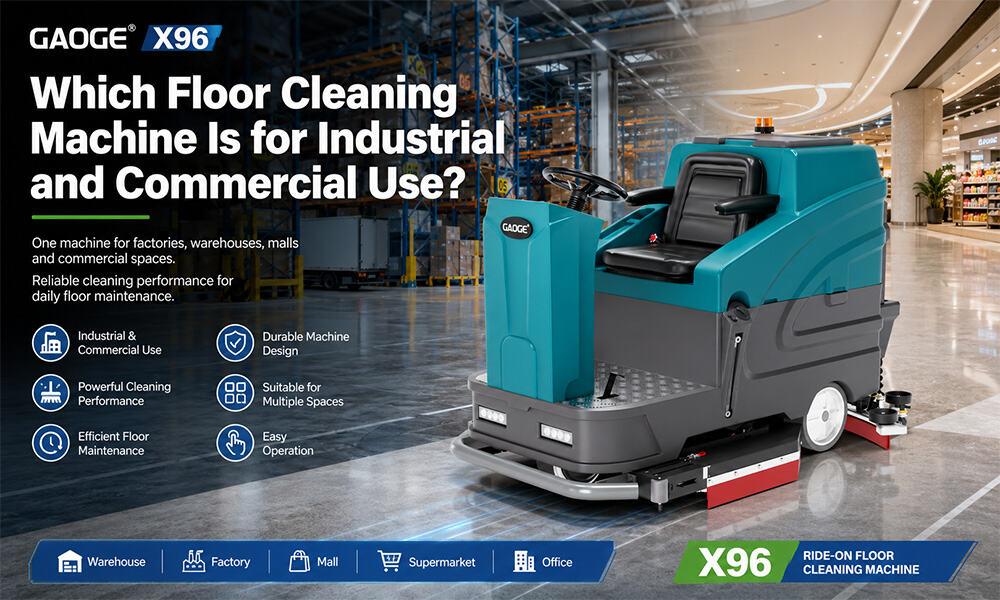
Understanding Industrial vs. Commercial Floor Cleaning Requirements
Industrial and commercial facilities place fundamentally different demands on floor cleaning machines. The choice between light commercial models and heavy-duty industrial units directly affects cleaning efficiency, equipment longevity, and total operating costs. Selecting the right machine starts with understanding how workload intensity, regulatory expectations, and facility operations shape real-world performance.
Workload Intensity, Shift Schedules, and Uptime Demands
Industrial environments—such as manufacturing plants and distribution centers—typically operate 24/7 across multiple shifts. Floors accumulate oil, grease, metal shavings, and heavy particulate debris that demand aggressive scrubbing, high brush pressure, and frequent passes. In these settings, machine uptime is non-negotiable: battery capacity, thermal management, and serviceability must support continuous operation without extended recharging or maintenance delays.
Commercial facilities—including offices, retail stores, and lobbies—face lower soiling loads and constrained cleaning windows, usually overnight or during off-peak hours. Here, maneuverability, quiet operation, and compact design matter more than raw power. A nimble walk-behind scrubber with a 2–4 hour runtime often delivers optimal balance between coverage and practicality.
Matching machine duty cycle to actual shift patterns prevents bottlenecks: under-spec’d equipment leads to incomplete cleaning or overtime labor; over-engineered units waste capital and energy.
Sector-Specific Compliance: Food Processing, Healthcare, and Retail Hygiene Standards
Regulatory requirements vary significantly by sector—and directly influence machine selection. Food processing facilities must comply with HACCP and FDA guidelines, mandating low-moisture scrubbing, rapid drying, and validated sanitation cycles to minimize microbial risk and avoid production stoppages. Healthcare environments require integration with EPA-registered disinfectants and documented pathogen reduction—often verified through third-party testing of scrubber-dryer dwell time, contact pressure, and solution temperature. Retail spaces prioritize slip resistance and visual cleanliness: streak-free drying, residue-free detergent delivery, and consistent squeegee performance are essential for customer safety and brand perception.
Choosing a machine certified to meet these standards—not just marketed as “suitable”—reduces compliance risk and supports verifiable hygiene outcomes.
Top Floor Cleaning Machine Types and Their Best-Use Applications
Selecting the right floor cleaning machine means aligning design strengths with operational realities. No single model excels everywhere—but understanding core capabilities helps match technology to need.
Walk-Behind and Ride-On Scrubbers: Balancing Coverage, Capacity, and Operator Ergonomics
Walk-behind scrubbers are ideal for facilities under 20,000 sq. ft. with narrow aisles, tight turns, or complex layouts—think grocery backrooms, school corridors, or hospital wings. Direct operator control enables precision around fixtures and obstacles. Ride-on scrubbers deliver superior productivity in large, open areas exceeding 30,000 sq. ft., such as warehouses, airports, or big-box retail. Their wider scrub paths (up to 48 inches), larger solution tanks (up to 50 gallons), and extended battery life reduce pass count and labor hours per cleaning cycle.
Ergonomic design isn’t optional—it’s operational: adjustable seats, intuitive controls, low noise profiles (<65 dB), and vibration-dampened steering all contribute to sustained operator effectiveness across long shifts.
Sweeper-Scrubber Hybrids and Autonomous Floor Cleaning Machines for High-Traffic Commercial Areas
Sweeper-scrubber hybrids combine dry debris removal and wet cleaning in a single pass—eliminating the need for separate sweeping and scrubbing steps. This dual functionality saves time, storage space, and labor, making them especially effective in retail malls, transportation hubs, and university campuses where foot traffic is constant and downtime unacceptable.
Autonomous floor cleaning machines take efficiency further: using LiDAR, cameras, and SLAM navigation, they clean pre-mapped zones unattended—typically overnight or during low-traffic periods. Integrated telematics provide real-time reporting on coverage, chemical usage, and maintenance alerts. Both hybrid and autonomous models commonly feature water recycling systems that extend runtime by up to 40%, reducing refill frequency and improving consistency across large or multi-zone facilities.
Floor Surface Compatibility: Matching the Floor Cleaning Machine to Your Facility
Concrete, Epoxy, and Polished Floors: Power, Brush Pressure, and Debris Handling Needs
Concrete, epoxy-coated, and polished concrete floors share density but differ critically in finish sensitivity. Heavy-soiled concrete in industrial settings requires high-pressure scrubbing (up to 1,200 PSI) and stiff poly brushes to dislodge embedded grime. Epoxy floors—common in labs and cleanrooms—need gentler treatment: reduced brush speed, soft-bristle pads, and pH-neutral detergents to preserve coating integrity. Polished concrete demands non-abrasive cleaning: low-pressure spray, microfiber pads, and squeegees designed to retain gloss without etching.
Debris handling capability is equally vital: machines deployed in metal fabrication or packaging areas should include high-capacity hoppers (≥15 gal) and vacuum-assisted pickup to manage dust, shavings, and loose particulates before scrubbing begins. Adjustable brush pressure and variable water flow allow one machine to safely serve multiple surface types within the same facility.
Tile, VCT, and Carpeted Zones: Residue-Free Drying and Low-Moisture Cleaning Options
Tile and VCT floors require thorough yet residue-free cleaning to maintain traction and prevent buildup. Opt for machines with precise automatic detergent dosing, high-speed squeegees (≥1,200 rpm), and dual-stage vacuum recovery—capable of removing >95% of surface moisture in a single pass. This minimizes slip hazard and eliminates sticky film that attracts dirt.
Carpeted zones demand low-moisture methods: dedicated carpet scrubbers or hybrid units with foam-cleaning modules apply minimal water (≤0.1 gal/sq. yd.) and extract it rapidly, cutting drying time to under 30 minutes and mitigating mold and mildew risk. Always verify compatibility with carpet manufacturer specifications—especially regarding brush type, dwell time, and maximum water application rate. Quick-change attachment systems enable seamless transitions between hard-floor and carpet cleaning modes, maximizing versatility without requiring multiple machines.
Key Selection Criteria for Long-Term ROI and Operational Fit
Total cost of ownership—not just sticker price—determines true value. Factor in energy use (battery efficiency vs. AC-powered), water and chemical consumption, consumable replacement frequency (brushes, pads, filters), and scheduled maintenance intervals. A machine priced 15% higher upfront but delivering 30% lower daily operating costs typically achieves full payback within 12 months.
Operational fit is equally decisive:
- Throughput: Match scrub path width and tank capacity to your square footage and cleaning window.
- Uptime: Facilities running multiple shifts need fast-charge batteries or hot-swap capability—no downtime for recharging.
- Support: Local service networks and parts availability reduce mean time to repair (MTTR).
- Compliance: Ensure built-in sanitization cycles meet FDA, CDC, or EPA validation requirements for your sector.
- Scalability: Models supporting future upgrades—like autonomous navigation kits or cloud-based fleet management—extend useful life and adapt to evolving needs.
Prioritizing reliability, cleaning consistency, and serviceability ensures your floor cleaning machine delivers measurable, sustainable ROI—not just short-term convenience.
FAQ
What is the difference between industrial and commercial floor cleaning requirements?
Industrial floor cleaning machines are designed for heavy-duty applications, addressing issues such as grease, metal shavings, and heavy particulate debris in 24/7 environments, while commercial models are focused on lighter cleaning loads, maneuverability, and quiet operation.
How do specific sectors influence floor cleaning machine requirements?
Sector regulations like HACCP guidelines for food processing or EPA standards for healthcare drive the need for specialized machines with features like low-moisture scrubbing, rapid drying, and validated sanitation cycles.
What types of floor cleaning machines are best for large facilities?
Ride-on scrubbers and sweeper-scrubber hybrids are ideal for large facilities. They offer wider cleaning paths, greater solution tank capacity, and reduced labor hours per cycle, making them well-suited for spaces over 30,000 sq. ft.
What factors contribute to the long-term ROI of floor cleaning machines?
Factors such as energy efficiency, consumable replacement frequency, maintenance intervals, and scalability for future upgrades contribute to the ROI of floor cleaning machines.
Can one machine handle multiple floor types?
Yes, machines with adjustable brush pressure, interchangeable cleaning attachments, and variable water flow can be adapted to different floor surfaces like concrete, epoxy, tile, and carpet.
Table of Contents
- Understanding Industrial vs. Commercial Floor Cleaning Requirements
- Top Floor Cleaning Machine Types and Their Best-Use Applications
- Floor Surface Compatibility: Matching the Floor Cleaning Machine to Your Facility
- Key Selection Criteria for Long-Term ROI and Operational Fit
-
FAQ
- What is the difference between industrial and commercial floor cleaning requirements?
- How do specific sectors influence floor cleaning machine requirements?
- What types of floor cleaning machines are best for large facilities?
- What factors contribute to the long-term ROI of floor cleaning machines?
- Can one machine handle multiple floor types?
