 EN
EN

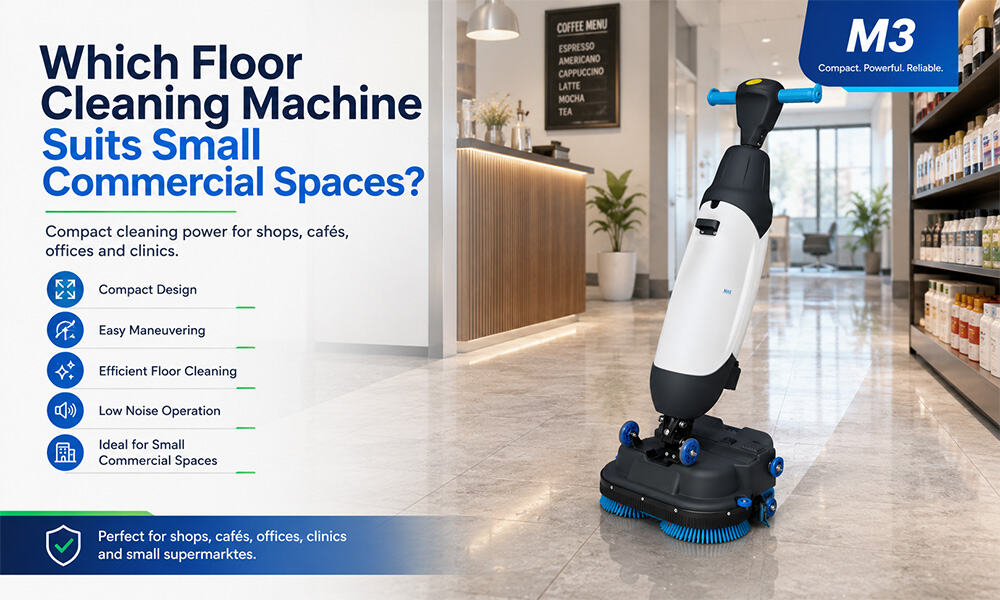
Maneuverability and Compact Design for Small Commercial Spaces
Why Compact Footprint and 360° Steering Matter in Tight, Cluttered Layouts
In small retail shops, offices, or cafes, space is at a premium. A floor cleaning machine with a compact footprint—ideally under 22 inches wide—navigates narrow aisles, slips between display racks, and fits under tables without requiring staff to constantly reposition furniture. It also clears standard doorways and workstations effortlessly. Equally vital is 360° steering: this allows the operator to pivot on the spot, enabling precise cleaning around corners, columns, and irregular obstacles. Without it, crews waste time backing up, reorienting, and maneuvering repeatedly—slowing down cycles and increasing operational disruption. In cluttered environments filled with chairs, cables, or merchandise, these features directly boost efficiency, reduce collision risk, and protect both floor finishes and fixtures.
Upright vs. Walk-Behind Floor Cleaning Machines: Agility Trade-Offs for Retail and Office Environments
Upright and walk-behind machines each offer distinct advantages depending on layout and obstacle density. Uprights typically have a smaller physical footprint and provide direct line-of-sight to the cleaning path—ideal for long, straight retail aisles where coverage per pass matters most. However, their turning radius is often limited, making tight pivots difficult. Walk-behind models deliver superior 360° maneuverability, allowing operators to scrub flush against walls, weave through cubicle clusters, and navigate around irregular obstructions with confidence. The trade-off is a slightly larger overall footprint and a steeper learning curve for smooth control. For highly cluttered or angular spaces—like offices with dense workstation layouts—a walk-behind unit usually delivers greater real-world agility. Ultimately, the decision hinges on typical obstacle density: the more congested the floor plan, the more valuable full 360° steering becomes.
Floor Type Compatibility and Cleaning Performance
Matching the Floor Cleaning Machine to Tile, Vinyl, Concrete, and Sealed Wood Surfaces
Floor material dictates cleaning method—and using the wrong approach risks damage, premature wear, or poor results. Tile requires gentle scrubbing to preserve grout integrity; vinyl demands non-abrasive brushes to avoid surface scratching; concrete tolerates higher pressure but still needs appropriate pad selection; sealed wood calls for low-moisture application and ultra-soft brushes to prevent finish degradation. The solution lies in versatility: choose a machine with adjustable down pressure, variable brush speed, and interchangeable brush/pad options. Pair it with neutral pH cleaning solutions—safe across most sealed surfaces while effectively removing soils without chemical etching. This alignment protects long-term floor investment, sustains appearance, and ensures consistent performance across mixed-material environments.
Case Insight: Selecting a Floor Cleaning Machine for a 2,400-sq-ft Mixed-Floor Retail Space
A 2,400-square-foot retail store featuring tile customer aisles and a sealed concrete stockroom presents a common yet nuanced challenge. The ideal machine is a compact walk-behind scrubber with quick-change brush systems: a soft nylon brush for tile and a medium-density scrubbing pad for concrete. Variable water flow prevents pooling on sensitive tile and grout, while battery runtime must support uninterrupted cleaning across both zones. With thoughtful configuration, one versatile unit handles both surfaces safely and efficiently—reducing capital expense, minimizing staff training, and ensuring uniform cleanliness. The outcome is not just operational simplicity, but also extended floor life and a consistently professional environment for customers and staff alike.
Critical Operational Specs for Small-Space Efficiency
Cleaning Path Width Under 22 Inches: A Key Indicator of True Small-Space Suitability
A cleaning path width under 22 inches is a reliable benchmark for genuine small-space capability. In retail aisles as narrow as 28 inches—or office corridors lined with furniture—a 20-inch swath allows clean, continuous forward motion without backtracking or constant repositioning. Wider paths force operators into inefficient stop-start patterns, increasing labor time and raising the risk of bumping shelves, displays, or fixtures. This spec isn’t just about size—it’s a direct proxy for real-world agility in confined, high-traffic commercial settings.
Battery Runtime, Tank Capacity, and Daily Coverage—Optimizing Uptime in Limited-Access Areas
Battery runtime and solution tank capacity are interdependent levers of productivity—especially in small spaces where access to utilities may be restricted. A 20-gallon tank paired with a 30-minute runtime suits many 2,000-sq-ft offices, but a 3,000-sq-ft retail location demands at least 25 gallons and 45 minutes of continuous operation to complete daily cleaning without mid-shift refills or drain-and-refill interruptions. Larger tanks and longer runtimes reduce downtime, minimize trips to service points (critical in narrow hallways or locked backrooms), and maintain consistent cleaning rhythm. Prioritizing these specs ensures the machine operates through the route—not around its limitations.
Total Cost of Ownership and Support for Small Businesses
For small businesses, the sticker price of a floor cleaning machine reflects only part of the financial commitment. Total cost of ownership (TCO) includes replacement batteries, brushes, squeegees, routine maintenance, energy use, and labor for daily operation. A lower-upfront model may incur higher long-term costs due to frequent repairs, poor battery longevity, or excessive consumable wear. Downtime—when the machine is out of service—also carries hidden costs: missed cleaning windows, inconsistent facility appearance, and potential reputational impact.
Support infrastructure is equally decisive. A strong warranty, local certified service partners, and readily available replacement parts significantly reduce repair delays and unexpected expenses. Intuitive controls and clear documentation cut staff training time and user error—factors that compound over years of daily use. To make an informed decision, small-business owners should project annualized TCO over three to five years, factoring in all consumables, expected service intervals, and realistic downtime assumptions. This holistic assessment ensures the selected machine supports both budget discipline and the operational realities of compact commercial spaces.
FAQ
Q1: What features make a floor cleaning machine suitable for tight spaces?
A: Compact footprint (under 22 inches wide) and 360° steering are critical. These features ensure machines can maneuver through narrow aisles, navigate obstacles, and pivot effortlessly without frequent repositioning.
Q2: Upright vs. walk-behind floor machines—how do I choose?
A: Uprights are best for straight, open layouts, while walk-behind models excel in tighter, more cluttered spaces. Consider your environment’s obstacle density when deciding.
Q3: How do I choose a machine for mixed-floor surfaces?
A: Look for a versatile unit with adjustable pressure, interchangeable brushes/pads, and compatibility with neutral pH cleaning solutions to handle varied materials like tile, vinyl, and sealed wood.
Q4: How can I estimate the total cost of ownership (TCO)?
A: Account for replacement parts, maintenance, consumables, and downtime beyond the purchase price. Project costs over 3–5 years for a realistic budget.
Q5: What operational specs should I prioritize in small retail or office spaces?
A: Focus on cleaning path width (under 22 inches), battery runtime, and tank capacity to ensure efficient operation without interruptions.
