 EN
EN

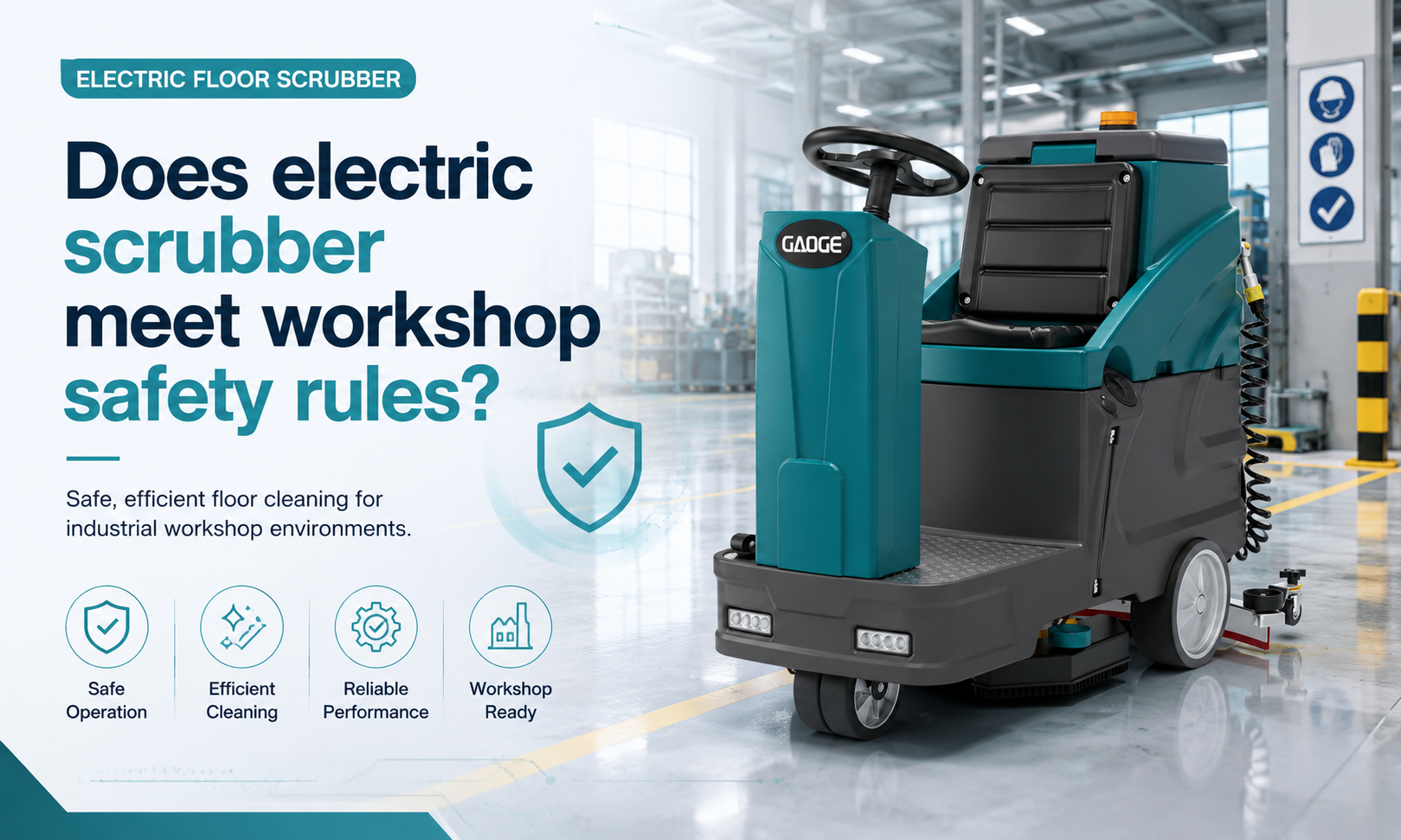
Regulatory Compliance Framework for Electric Floor Scrubbers
OSHA, CE, and RIDDOR Requirements Specific to Powered Cleaning Equipment
Electric floor scrubbers must meet multiple regulatory frameworks to operate legally in workshops. In the United States, OSHA’s General Duty Clause and standard 1910.178 (powered industrial trucks) apply when scrubbers share space with forklifts or pedestrian traffic. Manufacturers design models with emergency stop buttons, audible alarms, and non-slip pedals to satisfy these requirements. In Europe, the Machinery Directive 2006/42/EC mandates that all powered cleaning equipment carry CE marking before market entry. Under RIDDOR, any workplace injury involving a scrubber—such as a slip or electrical fault—must be reported to the Health and Safety Executive within prescribed timelines. Compliance also involves periodic risk assessments documenting machine use, operator training, and maintenance schedules. These overlapping rules ensure the electric floor scrubber is not only effective but legally sound.
How CE Marking Validates Design Safety for Electric Floor Scrubbers
CE (Conformité Européenne) marking confirms that an electric floor scrubber meets essential health and safety requirements set by the European Union. The process includes a conformity assessment covering electrical safety (EN 60335), electromagnetic compatibility (EN 55014), and mechanical hazards such as pinch points or tip-over risks. For scrubbers with autonomous features, additional standards like IEC 63327 apply. This validation gives workshop managers confidence that the machine’s design has been reviewed by notified bodies or self-certified under reliable modules. Without CE marking, the equipment cannot be sold or used within the EEA. Beyond legal necessity, the marking signals that components—battery enclosures, traction motors, and control systems—have passed rigorous testing for fire, shock, and operational failure. Selecting a CE-marked electric floor scrubber is a direct step toward regulatory compliance and audit readiness.
Top Workshop Hazards Addressed by Modern Electric Floor Scrubbers
Slip Prevention: How Dual-Mode Drying and Controlled Dispense Reduce Wet-Floor Incidents
Slips and falls remain the leading cause of workplace injuries during cleaning operations. Traditional mopping leaves floors wet and dangerous for hours. Modern electric floor scrubbers tackle this risk with dual-mode drying technology, combining a powerful vacuum and squeegee system to remove standing water in a single pass—leaving surfaces nearly dry immediately after cleaning. Controlled water dispensing systems further prevent over-wetting by adjusting flow based on floor type and soil level, eliminating puddles that cause slips. Operators no longer need to block off walkways for extended drying times, improving both safety and workflow. By reducing wet-floor incidents, these machines help workshops maintain compliance with OSHA’s walking-working surfaces regulations.
Electrical and Entrapment Risk Mitigation via IP65 Enclosures and Auto-Stop Sensors
Electrical shock is a serious hazard when cleaning near outlets or on conductive floors. Industrial-grade electric floor scrubbers counter this with IP65-rated enclosures—fully sealed against dust and low-pressure water jets—to prevent moisture from reaching internal electrical components. Auto-stop sensors detect obstacles or entrapment risks—including loose cords, low clearances, or sudden operator absence—and immediately halt brush rotation and drive motors. This rapid response prevents machinery from pulling cables or crushing objects, reducing both electrical and physical hazards. Together, these features ensure reliable operation in demanding workshop environments without exposing personnel to shock or injury.
Operational Safety Essentials: Training, PPE, and Risk Assessment Integration
Integrating an electric floor scrubber into a workshop requires a structured approach to training, personal protective equipment (PPE), and risk assessment. Operators must master machine controls, emergency stop procedures, and correct PPE use—including slip-resistant footwear and hearing protection. A documented risk assessment should identify hazards like wet floors, electrical connections, and moving parts. This foundation aligns with HSE reporting standards and feeds directly into mandatory R&I&E documentation.
Linking Electric Floor Scrubber Use to Mandatory R&I&E Documentation and HSE Reporting
Every electric floor scrubber operation must be backed by thorough records. A formal risk assessment evaluates slip, trip, and electrical hazards, specifying controls such as dual-mode drying and IP65-rated enclosures. Training documentation confirms each operator received hands-on instruction covering machine operation, emergency stops, and PPE practices. PPE issuance logs track distribution of slip-resistant boots, gloves, and hearing protection. These documents—risk assessment, training records, and inspection reports—form the mandatory R&I&E (Risk Assessment, Inspection, and Evaluation) documentation required under HSE guidelines. Regular reviews keep the risk assessment current with layout or equipment changes. Linking scrubber use directly to this documented framework demonstrates due diligence during audits, reduces incident rates, and fosters a proactive safety culture—protecting workers while maintaining operational efficiency.
Real-World Validation: Audit Results and Industry Benchmarking
While specifications and compliance checklists provide a theoretical safety profile, the true test of an electric floor scrubber occurs during on-site audits. Workshop managers should integrate unit performance into their regular safety inspection routines. Key audit metrics include slip-resistance test results after cleaning cycles, battery compartment temperature stability, and emergency-stop response time. By comparing these internal findings against published industry benchmarks—such as incident reduction rates from similar facilities—you validate whether the equipment delivers its promised safety improvements. This benchmarking process also highlights operational gaps, such as recurring moisture retention near electrical outlets, that may require additional training or machine adjustments. A data-driven audit loop ensures the electric floor scrubber remains a compliant asset rather than an overlooked liability.
FAQ
What are the legal requirements for electric floor scrubbers in workshops?
Electric floor scrubbers must follow OSHA, CE, and RIDDOR guidelines. These include design features like emergency stop buttons, CE marking, and documentation practices like risk assessment and training records.
What does CE marking indicate for electric floor scrubbers?
CE marking ensures compliance with essential health and safety standards like EN 60335 for electrical safety and EN 55014 for electromagnetic compatibility, allowing usage within the EEA.
How do modern floor scrubbers reduce slip hazards?
They feature dual-mode drying systems for rapid water removal and controlled water dispensing to prevent puddles.
What safety mechanisms do scrubbers offer against electrical and mechanical risks?
They use IP65-rated enclosures, auto-stop sensors, and other safeguards to mitigate risks such as electrical shock or entanglements.
How should workshops integrate electric floor scrubbers into their safety routines?
Workshops should conduct training, issue PPE like slip-resistant footwear, and maintain R&I&E documentation to ensure compliance and safety.
Table of Contents
- Regulatory Compliance Framework for Electric Floor Scrubbers
- Top Workshop Hazards Addressed by Modern Electric Floor Scrubbers
- Operational Safety Essentials: Training, PPE, and Risk Assessment Integration
- Real-World Validation: Audit Results and Industry Benchmarking
-
FAQ
- What are the legal requirements for electric floor scrubbers in workshops?
- What does CE marking indicate for electric floor scrubbers?
- How do modern floor scrubbers reduce slip hazards?
- What safety mechanisms do scrubbers offer against electrical and mechanical risks?
- How should workshops integrate electric floor scrubbers into their safety routines?
