 EN
EN

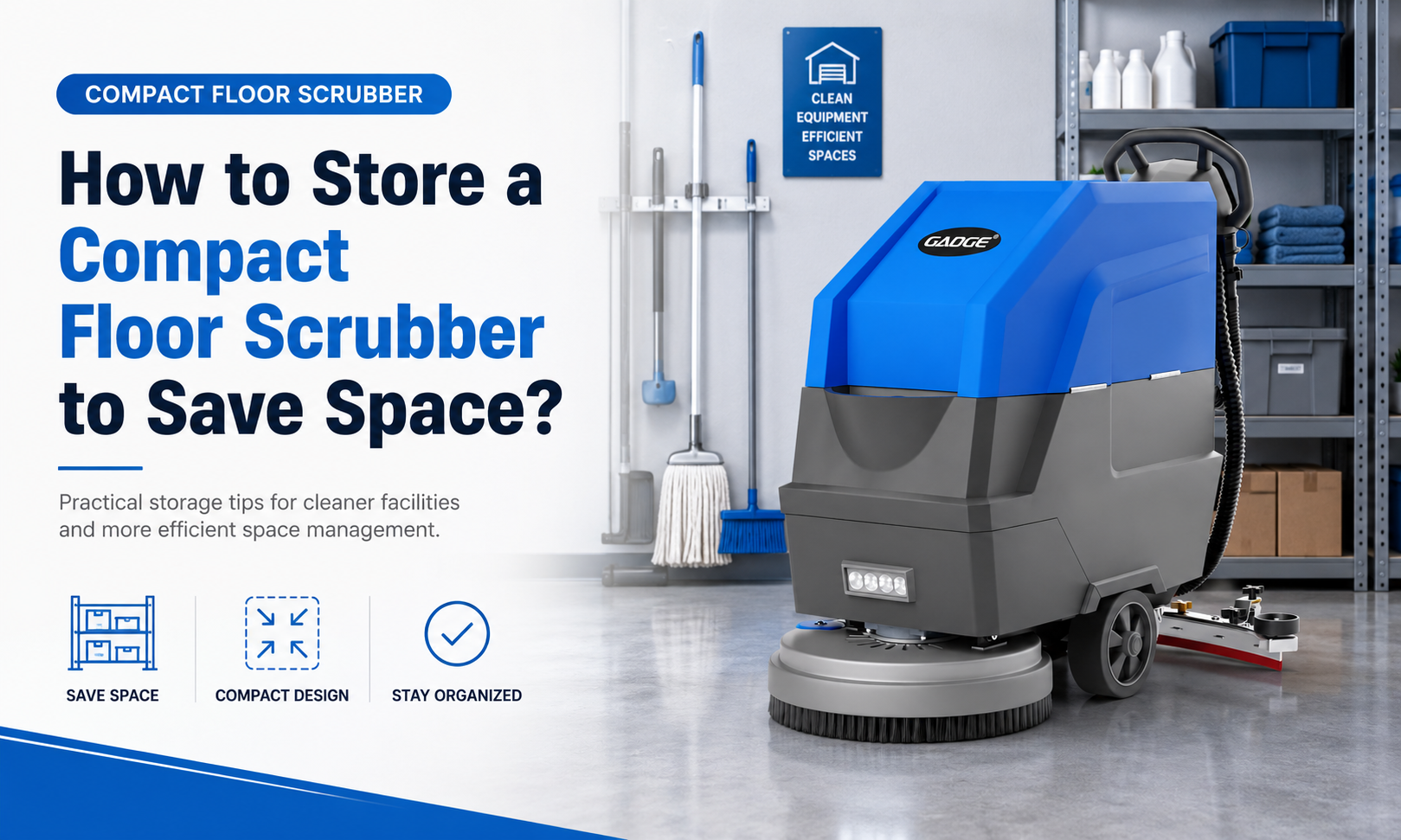
Why Smart Storage Is Critical for Compact Floor Scrubbers
A compact floor scrubber is a valuable investment for maintenance teams—but its size can be deceptive. Without a dedicated storage plan, these machines quickly become obstacles, consuming precious workspace and increasing the risk of damage. Bent squeegees, cracked solution tanks, and tangled cords are common consequences of haphazard storage—driving up repair costs and operational downtime. By contrast, a smart storage system protects critical components, extends equipment lifespan, and supports a safe, organized work environment. When every square foot counts, efficient storage isn’t a luxury—it’s essential to uninterrupted operational flow.
Space-Saving Storage Solutions for Compact Floor Scrubbers
Wall-Mounted Storage Systems
Wall-mounted storage frees up floor space in janitorial closets and maintenance rooms without sacrificing accessibility. Heavy-duty brackets or custom-fit shelving securely support the scrubber’s weight while holding it vertically—keeping it clear of foot traffic and moisture-prone floors. This upright orientation also promotes natural drying of the scrub head and squeegee, reducing odor and microbial buildup. Facilities managing multiple small-area cleanings per shift benefit most: wall mounts enable quick deployment and return, maintaining workflow continuity. For safety and longevity, always select a mount engineered for your specific model—ensuring stability during mounting, use, and daily removal for cleaning.
Fold-and-Lock Chassis Compatibility
Many modern compact floor scrubbers feature a fold-and-lock chassis that reduces their footprint by up to 40% when not in use. With the handle and upper assembly folded down and secured, the unit becomes low-profile enough to slide under desks, shelves, or service vehicle racks. This design eliminates the need for dedicated storage infrastructure and simplifies transport. Operators should confirm the folding mechanism uses reinforced hinges and positive-locking hardware to withstand repeated use without loosening. The folded position also improves access to the brush deck and squeegee assembly for routine inspection and cleaning. Where space is constrained—especially in healthcare, retail, or education settings—this feature delivers measurable gains in flexibility and efficiency.
Indoor Storage Best Practices to Maximize Floor Space
Strategic indoor storage preserves floor space while supporting equipment integrity. Rather than parking the scrubber in hallways or aisles, designate a recessed alcove, tall cabinet, or wall-adjacent zone sized to its upright footprint. Mount ceiling hooks for power cords and wall brackets for squeegee arms to keep accessories off the floor and prevent tripping hazards. These simple elevations reclaim 4–6 square feet per unit—enough room for a supply cart or compact workbench. Pair this with lean inventory principles: store only active tools on-site and rotate spares offsite or in centralized staging areas.
Zoning Wet/Dry Areas and Ventilation Requirements
Divide the storage area into clearly defined wet and dry zones. The wet zone—used immediately post-cleaning—should include a floor mat or drip tray beneath the scrub head and squeegee to capture residual water. Add targeted airflow: a small exhaust fan near the base of the unit, combined with a louvered wall vent at floor level, accelerates drying and expels moist air. Keep the door slightly ajar or install a mesh panel to encourage cross-ventilation. In the dry zone, store pads, brushes, and chemical containers on open, humidity-controlled shelving (ideally below 50% RH). Label both zones visibly to reinforce staff training. Proper zoning mitigates bacterial growth, prevents battery terminal corrosion, and can extend service intervals by up to 30%, according to facility maintenance benchmarks from the International Sanitary Supply Association (ISSA).
Proper Positioning: Upright Storage for Scrub Heads and Squeegees
Correct positioning during storage directly affects cleaning performance and wear-part longevity. Always raise the squeegee when the machine is parked—prolonged contact with the floor warps rubber blades, causing streaks and diminished suction. Store the blade facing upward, never resting on its cutting edge, whether attached or removed. Similarly, keep the scrub head raised or upright to avoid flattening brush bristles or damaging pad drivers. Many compact models include automatic lift mechanisms or park brakes to support this; verify they engage reliably during shutdown. Store the unit in a climate-controlled area: extreme heat softens squeegee rubber, while cold temperatures cause brittleness. Consistent upright storage preserves component geometry, sustains cleaning consistency, and delays replacement cycles—supporting both operational reliability and total cost of ownership.
FAQ
Why is proper storage important for compact floor scrubbers?
Proper storage prevents damage, prolongs the machine’s lifespan, and ensures a safe and organized work environment.
What are some space-saving storage options?
Wall-mounted systems and fold-and-lock chassis designs are excellent options for saving space.
How does zoning wet and dry areas help in storage?
Zoning mitigates bacterial growth, prevents corrosion, and ensures quicker drying of components, enhancing overall maintenance efficiency.
Why is upright storage essential for scrub heads and squeegees?
Upright storage maintains the geometry of components, prevents wear, and avoids unnecessary damage, preserving performance and durability.
Can compact floor scrubbers be stored outdoors?
No, these machines should be stored in climate-controlled areas to avoid damage from extreme temperatures and moisture.
