 EN
EN

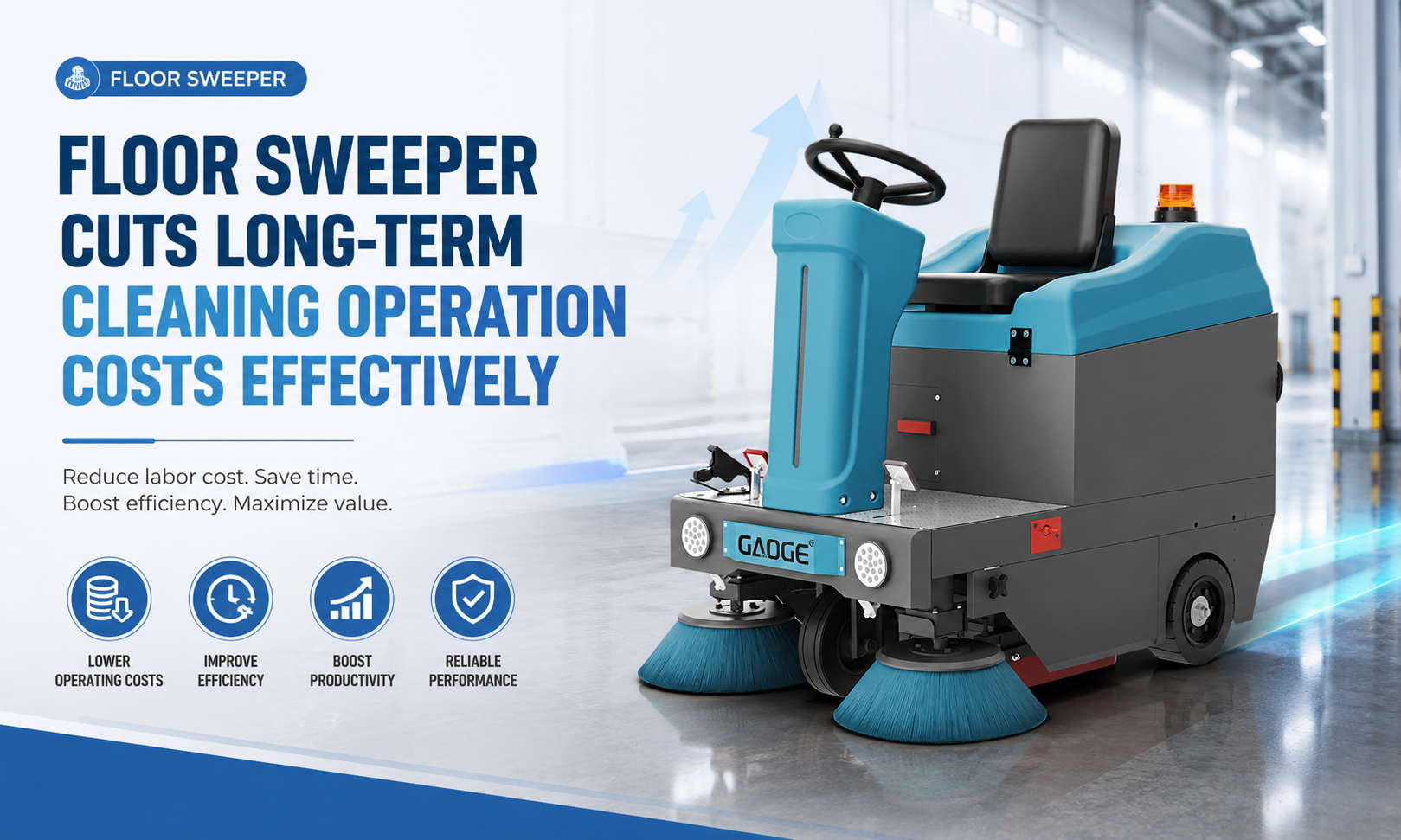
Labor Cost Reduction Through Floor Sweeper Automation
From Three Manual Shifts to One Operator + Fleet Oversight
Replacing manual sweeping crews with automated floor sweeper fleets fundamentally shifts labor models. A facility that previously required three shifts of six workers each can transition to a single operator monitoring a fleet of machines. These industrial floor sweepers cover 30,000–40,000 sq. ft. per hour—roughly three times the rate of manual teams. The operator focuses on routing, debris disposal, and occasional intervention, while the sweepers operate continuously across all shifts. This eliminates shift handoff delays, reduces overtime, and frees headcount for value-added tasks. The net result is a direct labor cost reduction of 50–70%, depending on facility size and shift structure—without compromising coverage or cleanliness.
62% Lower FTE Dependency: Benchmark Data from ISSA 2023
The 2023 ISSA benchmark study confirms this structural shift: facilities deploying automated floor sweepers reduce full-time equivalent (FTE) labor dependency by 62%. For a 200,000 sq. ft. warehouse requiring 8 FTEs for manual sweeping, automation cuts the need to just 3 FTEs—yielding approximately $250,000 in annual labor savings at average industrial wages. Savings compound through reduced recruitment, training, and workers’ compensation costs. Critically, automated sweepers maintain consistent coverage during breaks, lunches, and absences—removing reliance on temporary labor. As the ISSA report emphasizes, this is not incremental efficiency but a sustained, equipment-lifespan-level realignment of labor demand.
Operational Efficiency Gains That Compound Long-Term Savings
Reduced Downtime and Faster Coverage: 3x Area per Hour vs. Manual Sweeping
Automated floor sweepers cover up to three times more area per hour than manual crews—translating directly into reduced operational downtime. Instead of halting workflows to accommodate cleaning, facilities sustain throughput while aisles and bays are cleared efficiently alongside other traffic. Over time, this speed advantage recovers thousands of hours in lost productivity annually. When scaled across shifts and daily schedules, faster coverage becomes a primary driver of total cost of ownership reduction—not just for cleaning, but for overall facility operations.
Lower Consumables, Maintenance, and Energy Costs Over Equipment Lifespan
Beyond speed, floor sweepers deliver long-term savings through predictable, lower-cost operations. Durable brushes and high-efficiency filtration systems last significantly longer than disposable brooms and dustpans. Battery-powered models consume energy at a fraction of the cost associated with manual labor—and require no additional lighting or HVAC adjustments during cleaning. With routine maintenance, industrial floor sweepers operate reliably for 5–7 years, incurring only scheduled parts and service expenses. Factoring in these reduced consumable, energy, and maintenance outlays, the total operational cost per square foot drops meaningfully—making automation a strategic OPEX lever, not just a capital expense.
ROI and Payback Analysis for Industrial Floor Sweepers
Median Payback in 14–18 Months Across Warehousing and Manufacturing
Industrial floor sweepers deliver a median payback period of 14–18 months in warehousing and manufacturing environments. This rapid return stems from replacing multiple manual shifts with one continuously operating unit—driving labor reductions of up to 62%, as validated by the ISSA 2023 benchmark. Combined with 3x hourly coverage rates and declining per-square-foot operational costs over time, payback accelerates further. Within two years, adopters typically see total operational expenditure fall by 30% or more—confirming floor sweeper automation as a high-impact, financially resilient investment.
Key Payback Drivers: Floor Area, Shift Schedule, and Surface Type
Payback timing hinges on three core variables: floor area, shift schedule, and surface type. Larger facilities generate greater labor savings by displacing more manual hours. Multi-shift operations realize faster returns because sweepers operate unattended during off-hours—extending productive runtime without added labor cost. Surface condition also matters: smooth concrete supports peak sweeping speeds and brush longevity, while rough or irregular surfaces may modestly reduce efficiency and increase wear. Facility managers who assess these factors upfront can select optimal configurations—and forecast ROI with precision.
Real-World Validation: Case Evidence of Sustained OPEX Reduction
A large automotive parts warehouse replaced three manual sweeping teams with a single industrial floor sweeper. After 18 months, it achieved a 74% drop in cleaning labor costs and a 42% reduction in overall operating expenses. The machine covered 35,000 sq. meters per shift—no overtime, no shift differentials. Year-two maintenance averaged $0.18 per operating hour—less than half the projected budget—and uptime exceeded 96%. Floors maintained consistent cleanliness, contributing to a measurable decline in slip-and-fall incidents. These outcomes align with the broader 2023 ISSA Industry Report, where 81% of facilities adopting automated floor sweepers achieved payback within 20 months and sustained OPEX reductions for three or more consecutive years.
FAQ
Q: How much labor cost can be reduced by using automated floor sweepers?
A: Labor costs can be reduced by 50–70%, depending on facility size and shift structures, as automated floor sweepers eliminate the need for multiple manual shifts.
Q: What are the key benefits of floor sweeper automation?
A: Benefits include 3x faster area coverage, reduced operational downtime, lower energy and maintenance costs, and consistent cleaning across shifts.
Q: What is the typical payback period for industrial floor sweepers?
A: The median payback period ranges from 14–18 months, based on floor area, shift schedules, and surface conditions.
Q: How do automated sweepers affect full-time equivalent (FTE) demands?
A: They reduce FTE demand by 62% on average, allowing facilities to reallocate labor to higher-value tasks while maintaining cleaning efficiency.
Q: Are automated floor sweepers suitable for all floor types?
A: While smooth concrete floors allow for peak efficiency, sweepers are also effective on various surfaces, though rough or irregular floors may slightly reduce performance and increase wear.
