 EN
EN

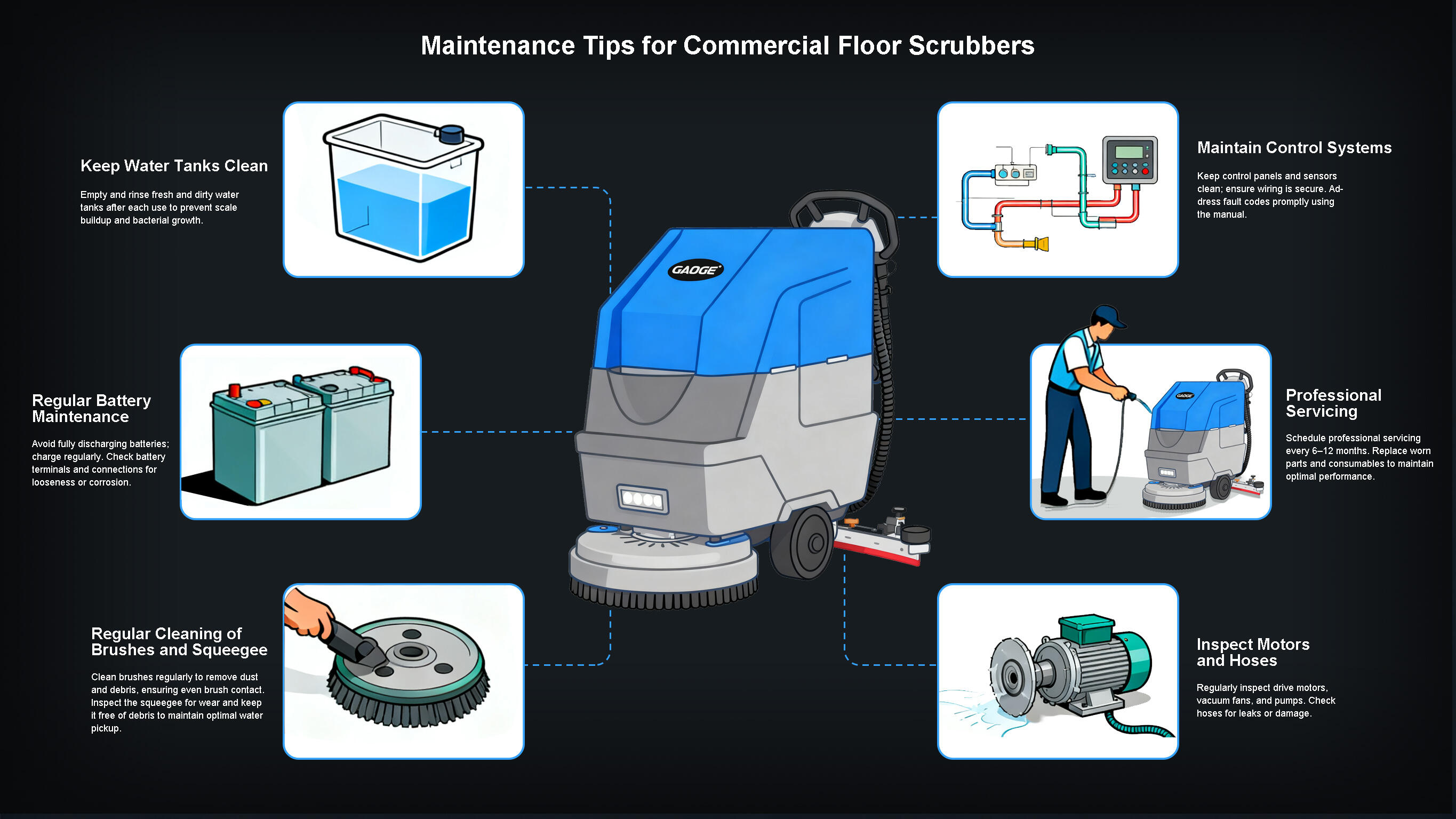
Follow a Structured Preventative Maintenance Schedule
Adhering to the manufacturer's recommended maintenance routine for commercial floor scrubbers
A 2023 study on equipment reliability found that facilities sticking to manufacturer maintenance recommendations see about 37% fewer surprise breakdowns. The guidelines cover basic stuff like when to lubricate parts, checking motors regularly, and updating software for different scrubber models. When these steps get skipped, components tend to wear out faster particularly pumps and drive systems which leads to bigger problems down the road. Some facility managers report paying an extra $1,200 or so each year just because regular maintenance wasn't done properly according to Facility Management Journal's findings from last year.
Daily and weekly inspection checklist: Key components to monitor
Maintenance staff need to look at both the mechanical parts, fluid systems, and electrical components of cleaning equipment on a regular basis. For everyday maintenance, checking things like how tight the brushes are, making sure there's enough solution in the tanks, and verifying battery power levels is essential work. Once a week brings different tasks including aligning those squeegees properly, looking for any cracks or leaks in hoses, and cleaning out filters that get clogged over time. The Cleaning Equipment Report put together some interesting data last year showing that nearly seven out of ten early failures with scrubbers actually come down to simple problems missed during routine checks. That makes sense when we think about it since most breakdowns happen because something small gets ignored until it becomes a big problem.
Creating a data-backed preventative maintenance program to reduce downtime
Keeping good maintenance records makes it possible to figure out when parts need replacing, and studies indicate that predictive maintenance can actually make scrubbers last anywhere from two to three extra years. When companies track how fast brushes wear down on various flooring surfaces, they can create consistent replacement timelines for their cleaning equipment. This approach cuts down on unexpected breakdowns quite a bit too, around 42 percent according to research published by the Ponemon Institute back in 2023. Modern cloud connected maintenance management systems have taken this even further. These platforms monitor equipment performance as it happens, sending out maintenance reminders not just when time passes but when actual wear indicators reach certain thresholds. No more guessing games based on calendar dates anymore.
Inspect and Replace Worn Brushes, Pads, and Squeegees
Monitoring Brush and Pad Wear Based on Usage and Surface Type
Daily inspections of brushes and pads prevent excessive wear and poor cleaning results. Concrete floors wear down bristles 28% faster than vinyl or epoxy surfaces, per industry studies. In high-traffic areas, rotate nylon brushes every 40–60 operational hours and replace them when bristle height decreases by ¼ inch.
Adjusting or Replacing Brushes for Consistent Cleaning Performance
Worn brushes reduce scrubbing efficiency by up to 50% and leave streaks. For polished marble, use soft-bristle brushes at ₵ 400 RPM; switch to medium-density brushes for sealed concrete. Replace brushes immediately if more than 30% of bristles are frayed or missing.
Evaluating Squeegee Integrity to Eliminate Water Streaks and Residue
Cracked or warped squeegee blades lead to water pooling and microbial growth. Industry guidelines recommend flipping rubber blades weekly and replacing them every 3–6 months. Gaps exceeding 1/8" between the blade and floor reduce water recovery by 70%, so ensure consistent contact during operation.
Balancing Brush Pressure: Avoiding Over-Tightening and Under-Cleaning Issues
Excessive downforce (¥60 psi) increases brush wear and damages floor coatings. Always use manufacturer-specified settings:
| Floor Type | Optimal Pressure |
|---|---|
| Terrazzo | 25–35 psi |
| Industrial VCT | 35–45 psi |
| Insufficient pressure (<20 psi) fails to remove grease buildup, especially in warehouse environments. |
Maintain Fluid Systems and Solution Management Components
Proper maintenance of fluid systems ensures peak cleaning performance and prevents mechanical failure. These systems manage cleaning solutions, wastewater, and debris removal, making regular oversight crucial.
Daily Checks of Fluid Levels in Commercial Floor Scrubber Tanks
Begin each shift by verifying solution and recovery tank levels. Underfilled tanks strain pumps, while overfilling risks leaks and inconsistent cleaning. Look for cracks or sediment buildup, which can contaminate fluids and impair system efficiency.
Cleaning Solution and Recovery Tanks to Prevent Clogs and Odors
Flush tanks weekly to remove detergent residue, grease, and organic matter that contribute to clogs and bacterial growth. Use non-abrasive cleaners to preserve tank material, followed by thorough rinsing. Preventive tank maintenance reduces downtime by up to 40% in industrial cleaning systems.
Inspecting Hoses, Connections, and Vacuum Filters for Optimal Suction
Inspect hoses weekly for cracks, kinks, or loose fittings that compromise suction. Replace vacuum filters monthly—or more frequently in high-debris settings—to maintain airflow. Clogged filters force motors to work harder, shortening their operational life.
Preventing Blockages by Routinely Servicing Vacuum Hoses and Pump Systems
Flush vacuum lines quarterly to clear trapped debris. Check pump impellers for wear, as damaged blades reduce fluid transfer rates. In hard-water areas, descale pumps annually to prevent mineral buildup that restricts flow.
Ensure Proper Battery and Electrical System Care
Battery care significantly impacts runtime and reliability. Nearly 40% of premature battery failures stem from improper charging practices, according to a 2024 ToolSense equipment maintenance study, underscoring the importance of disciplined power management.
Maintaining Battery Health for Longer Runtime and Reliability
Lead-acid batteries require monthly electrolyte checks and terminal cleaning to prevent corrosion. For lithium-ion models, keeping charges within a 20–80% range reduces cell stress and extends cycle life up to threefold compared to full discharges.
Best Practices for Charging: Avoiding Deep Discharges and Maximizing Cycle Life
Recharge batteries after each use, even with partial discharge. Allowing lead-acid units to drop below 50% charge promotes sulfation, while storing lithium-ion packs at full capacity accelerates degradation. Use smart chargers with temperature compensation to adjust voltage according to ambient conditions.
Inspecting Electrical Components and Safety Features Regularly
Monthly checks of wiring harnesses, connectors, and circuit breakers help prevent corrosion-related failures. Test emergency stop buttons and tilt sensors quarterly, as faulty safety systems account for 27% of electrical malfunctions in industrial cleaning equipment (DriveSafe Online 2023).
Lead-Acid vs. Lithium-Ion: Comparing Maintenance Demands for Commercial Floor Scrubbers
While lead-acid batteries cost 60% less upfront, lithium-ion alternatives require 70% less routine maintenance and tolerate partial charging without capacity loss. However, lithium systems demand precise voltage control—a single overcharge event can reduce lifespan by 15–20% (Remi Power Systems 2024).
Optimize Performance Through Lubrication, Calibration, and Professional Servicing
Lubricating Moving Parts to Minimize Wear and Mechanical Failure
Apply manufacturer-approved greases to bearings, wheels, and pivot points to prevent premature failure. A 2023 study found equipment with optimized lubrication schedules experienced 40% fewer mechanical issues. Avoid over-lubrication, which attracts debris, and under-lubrication, which increases friction—precision is key.
Calibrating Settings for Different Floor Types and Soil Levels
Adjust brush pressure and solution flow based on surface type and soil severity. Sealed floors typically require 80–100 PSI, while unsealed surfaces need 50–70 PSI to avoid damage. WorkTrek´s 2023 analysis showed proper calibration reduces rework rates by 30% in facilities with mixed flooring.
Routine Filter Cleaning to Maintain Airflow and System Efficiency
Clogged filters reduce suction power by up to 60%, increasing motor strain. Clean vacuum filters weekly and replace them every 300 operational hours. Watch for cracks in filter media, debris layers thicker than 1/8", and warped housings.
Scheduling Professional Servicing and Leveraging Maintenance Logs
Even with diligent in-house care, schedule professional inspections twice a year to identify hidden wear. Track key metrics in maintenance logs to support long-term reliability:
| Metric | Ideal Frequency | Performance Benchmark |
|---|---|---|
| Brush motor amp draw | Monthly | >10% above factory spec |
| Battery discharge cycles | Quarterly | <500 cycles (lead-acid) |
| Squeegee alignment | Biweekly | <2° deviation from parallel |
This data-driven strategy extends scrubber lifespan by 2–3 years compared to reactive approaches.
FAQ
What are the benefits of following a preventative maintenance schedule for floor scrubbers?
Following a preventative maintenance schedule can reduce surprise breakdowns by 37%, extend scrubber life by two to three years, and save facility managers potentially $1,200 annually in repairs.
How often should brushes and pads be inspected and replaced?
Brushes and pads should be inspected daily and replaced every 40–60 operational hours in high-traffic areas or when bristle height reduces by ¼ inch.
What is the recommended battery maintenance for floor scrubbers?
For lead-acid batteries, check electrolytes and clean terminals monthly. For lithium-ion models, keep charges within 20–80% to extend cycle life. Avoid complete discharges to prevent sulfation.
How should fluid systems be maintained?
Check fluid levels daily, flush tanks weekly, and inspect hoses and connections weekly to prevent clogs, leaks, and reduced cleaning efficiency.
Why is professional servicing important even with regular in-house maintenance?
Professional servicing can identify hidden wear not easily visible during routine checks. This approach supports long-term reliability and extends the lifespan of cleaning equipment.
Table of Contents
- Follow a Structured Preventative Maintenance Schedule
- Inspect and Replace Worn Brushes, Pads, and Squeegees
- Maintain Fluid Systems and Solution Management Components
- Ensure Proper Battery and Electrical System Care
- Optimize Performance Through Lubrication, Calibration, and Professional Servicing
-
FAQ
- What are the benefits of following a preventative maintenance schedule for floor scrubbers?
- How often should brushes and pads be inspected and replaced?
- What is the recommended battery maintenance for floor scrubbers?
- How should fluid systems be maintained?
- Why is professional servicing important even with regular in-house maintenance?
