 EN
EN

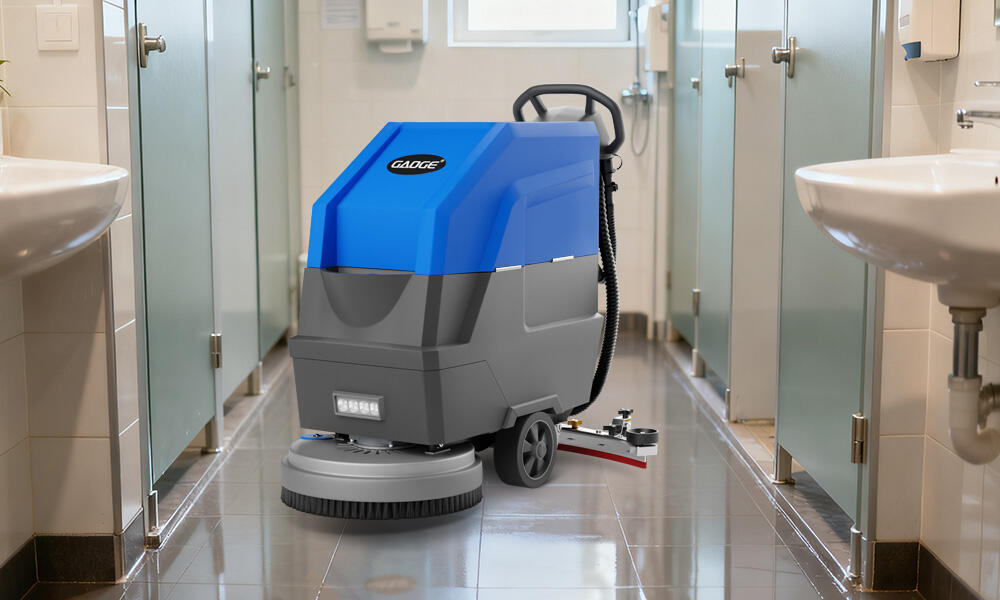
Key Design Elements That Enhance Agility of Walk-Behind Floor Scrubbers
Modern walk-behind floor scrubbers integrate four critical design features to optimize tight-space performance:
| Feature | Impact on Maneuverability | Industry Benchmark* |
|---|---|---|
| Narrow scrub deck | Enables cleaning between 14-17" wide aisles | 17" (commercial standard) |
| Zero-turn capability | Reduces required turning space by 40% | 180° pivots in place |
| Low-profile tanks | Lowers center of gravity for better balance | 22" total height |
| Modular components | Simplifies doorway navigation | 85% disassembly in <3 mins |
Based on 2023 industrial equipment design surveys
These engineering priorities enhance accessibility in compact environments like pharmacies (average aisle width: 5.2 ft) and retail stockrooms, where over 78% are under 800 sq ft according to PS Janitorial's real-world maneuverability testing.
The Role of Turning Radius in Tight-Space Navigation
The turning radius of a scrubber makes all the difference when it comes to getting around those tricky corners and tight spots in stores. Machines that have a turning radius under 24 inches manage to clean about 93% of small areas, which is way better than regular scrubbers that only hit around 67% according to Facility Maintenance Journal from last year. What makes this possible? These advanced models actually position their rotation points at the wheels instead of the middle of the machine. This clever design lets them spin right next to things like frozen food displays without needing much space at all. Facility managers love this feature because it means they don't have to rearrange store layouts just to get proper cleaning done.
Compact Footprint and Portability: Matching Equipment to Operational Layouts
The most space-efficient walk-behind scrubbers combine:
- Collapsible handles (reduces storage height by 38%)
- 55 lb or lighter designs (meets OSHA single-person lift guidelines)
- 19" door clearance capability (standard in 89% of small businesses)
This combination allows seamless access to narrow service corridors (average width: 4.1 ft), minimizing disruption during daily operations.
Operator Control and Ergonomic Features for Cluttered Environments
The control handles pivot through almost 210 degrees, making it easy to change directions with just one hand while moving around display racks and shelves. Flooring sensors built into the system detect busy areas and keep the machine going at around 0.3 meters per second there, which helps avoid accidents and keeps the cleaning job looking consistent across different parts of the store. Operators appreciate the padded grips on their palms too since they cut down on tired hands after those long cleaning sessions that often stretch past three hours straight.
Top Compact Walk-Behind Floor Scrubber Models for Small Commercial Spaces
Tennant CS16 Micro Scrubber: Features and Real-World Performance
The Tennant CS16 Micro Scrubber really shines where space is limited thanks to its 20 inch cleaning path and tight 31 inch turning circle. This makes it great for navigating narrow pharmacy corridors and small retail stores where bigger machines just won't fit. With a generous 15 gallon solution tank, this machine needs refilling about 40 percent less often than other scrubbers on the market. The rear wheel steering system lets cleaners maneuver around displays and equipment with just one hand, which saves time during those busy cleaning shifts. According to field tests from last year, janitors at convenience stores reported getting through roughly 1,200 square feet of floor space about a quarter faster using this model compared to older cleaning methods.
Alternative Compact Walk-Behind Scrubber Models for High-Density Zones
Leading manufacturers offer specialized compact models tailored for constrained environments:
- Karcher BR 30/1 C BP: Combines 19.7" width with lithium-ion batteries for over three hours of uninterrupted operation
- Advance CS2000: Equipped with dual adjustable squeegees to clean under retail shelving up to 18" high
- NaceCare Viper V3: Uses pivot-and-castor steering to efficiently maneuver around café table clusters
These models consistently achieve 90% water recovery rates in spaces under 800 sq ft—essential for maintaining slip-resistant floors that comply with ADA standards.
Turning Radius Comparison: Data Insights Across 5 Leading Compact Models
| Model | Turning Radius | Cleaning Path | Ideal Space Type |
|---|---|---|---|
| Tennant CS16 | 31" | 20" | Retail stores |
| Karcher BR 30/1 C BP | 34" | 19.7" | Office corridors |
| Nilfisk SW 200 | 29" | 21.5" | Commercial kitchens |
| Advance CS2000 | 33" | 18" | Medical supply rooms |
| IPC Eagle SC500 | 30" | 19" | School locker rooms |
Data from IFMA 2022 facility benchmarks shows that models with turning radii under 32" improve cleaning productivity by 18% in areas narrower than 48".
Real-World Cleaning Efficiency of Walk-Behind Floor Scrubbers in Restricted Layouts
Balancing Scrub Width and Accessibility in Narrow Corridors
According to the 2024 facility analysis from United Rentals, walk behind scrubbers that have scrub path widths between 17 and 22 inches work best in hallways less than eight feet wide. The smaller models with 14 to 17 inch paths might cut down on coverage speed by around 23%, but these machines can actually make those sharp 90 degree turns needed in narrow pharmacy aisles or cramped stockrooms where space is at a premium. When operators adjust the brush pressure settings between 18 and 35 psi, they tend to need about 38% fewer passes over areas where different floor types meet like concrete transitioning into epoxy surfaces in tight spaces throughout facilities.
Performance Case Studies: Pharmacies, Convenience Stores, and Retail Outlets
A 12-month study of 42 locations revealed measurable gains in efficiency:
| Location Type | Avg. Space | Cleaning Time Reduction | Water Usage Efficiency |
|---|---|---|---|
| Pharmacy (1,200 sf) | 6.5' aisles | 24% | 18 gal/hour |
| Convenience Store | 800 sf | 19% | 14 gal/hour |
| Boutique Retail | 1,500 sf | 31% | 22 gal/hour |
Compact walk-behind models complete night cleans 18% faster in stores under 10,000 sq ft compared to manual mopping, per Sweeperland's retail cleaning study. Dual-tank systems are especially valued for sustaining chemical efficacy during 4–6 hour shifts in confined food service areas.
Why Standard Floor Scrubbers Struggle in Small Commercial Spaces
Limitations of Larger Walk-Behind Floor Scrubbers in Tight Environments
Walk behind scrubbers that are over 21 inches wide and about 50 inches long really struggle in facilities smaller than 8,000 square feet. Their turning radius ranges between roughly 54 to 60 inches according to some industry reports from last year, which makes maneuvering around things like pharmacy shelves, store displays, and cafe tables pretty difficult. Cleaning staff end up wasting quite a bit extra time getting these big machines turned around in cramped spaces. Plus, those larger scrubbing surfaces tend to bump into walls and fixtures more often than not during routine cleaning tasks.
Industry Challenge: Meeting High Cleanliness Standards Within Space Constraints
According to Facility Care Journal from 2024, almost 37 percent of retail maintenance staff say their cleaning gets worse when they use regular walk behind scrubbers in smaller stores below 5,000 square feet. Stores often have narrow produce sections that barely fit two people side by side, tight stockroom doorways, and small spaces for food prep areas. These environments need machines that can really clean hard surfaces but also turn around easily within about 45 inches. When stores don't get this right, they end up missing their cleanliness targets. We're talking about 12% more bacteria hanging around in those tight spots. Many places just end up going back to old fashioned hand cleaning methods instead, which takes way more time and effort from workers who already have plenty on their plates.
FAQ Section
What are the key design features of walk-behind floor scrubbers that enhance maneuverability?
Key design features include a narrow scrub deck, zero-turn capability, low-profile tanks, and modular components. These elements help optimize performance in tight spaces.
How does the turning radius affect the scrubber's performance in confined areas?
Scrubbers with a turning radius under 24 inches can clean about 93% of small areas, allowing them to navigate around tight spots more effectively than traditional models.
What makes a scrubber suitable for small commercial spaces?
Factors like collapsible handles, lightweight designs, and specific door clearance capabilities make scrubbers more suitable for small areas by enhancing portability and accessibility.
Why do larger walk-behind floor scrubbers struggle in tight environments?
Larger scrubbers have bigger turning radii and scrubbing surfaces, which can be difficult to maneuver in confined areas, often resulting in wasted time and less efficient cleaning.
Table of Contents
- Key Design Elements That Enhance Agility of Walk-Behind Floor Scrubbers
- The Role of Turning Radius in Tight-Space Navigation
- Compact Footprint and Portability: Matching Equipment to Operational Layouts
- Operator Control and Ergonomic Features for Cluttered Environments
- Top Compact Walk-Behind Floor Scrubber Models for Small Commercial Spaces
- Real-World Cleaning Efficiency of Walk-Behind Floor Scrubbers in Restricted Layouts
- Why Standard Floor Scrubbers Struggle in Small Commercial Spaces
-
FAQ Section
- What are the key design features of walk-behind floor scrubbers that enhance maneuverability?
- How does the turning radius affect the scrubber's performance in confined areas?
- What makes a scrubber suitable for small commercial spaces?
- Why do larger walk-behind floor scrubbers struggle in tight environments?
