 EN
EN

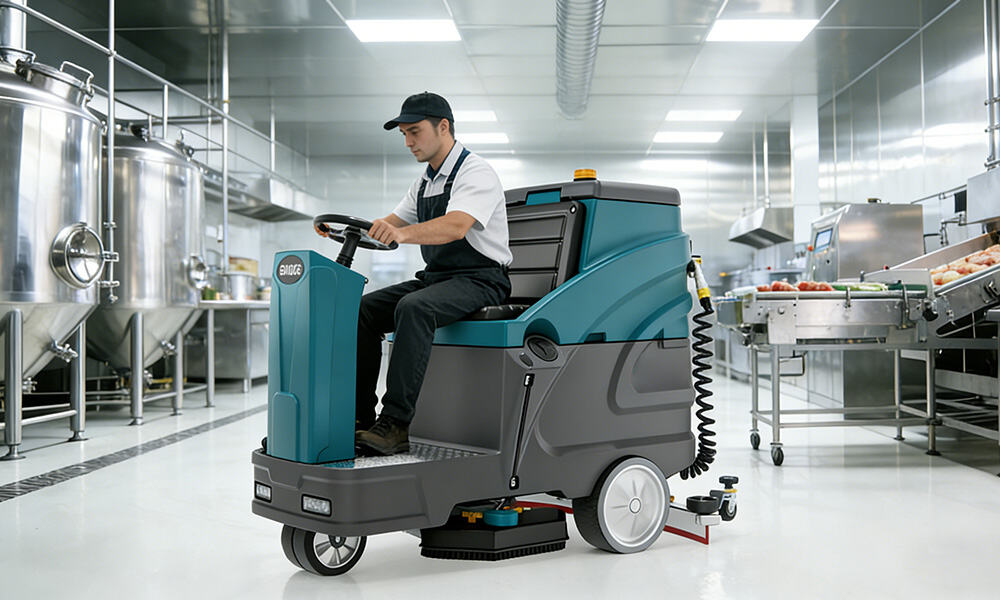
Regulatory Foundations: How Food Safety Standards Shape Floor Cleaner Machine Requirements
Mapping BRCGS, SQF, and FSSC 22000/ISO 22002-100 to Floor Cleaner Machine Design Criteria
The global food safety standards have a major impact on how floor cleaner machines are designed. Standards like BRCGS and SQF insist that manufacturers prove their machines actually clean effectively. This means including things such as parts that can be taken apart without tools so regular microbial tests can be done properly. Then there's FSSC 22000 which brings in ISO 22002-100 requirements about materials. Basically, every component needs to stand up to harsh cleaning chemicals without breaking down or rusting over time. When we look at all these different standards together, they basically set out three main principles for keeping equipment hygienic in food processing environments.
- Non-absorbent polymer housings (â¤0.5% water absorption)
- Internal slope angles >3° to ensure complete fluid drainage
- Absence of fasteners in product contact zones
FDA & USDA Hygienic Design Principles: Why Seamless Construction and Drainability Are Non-Negotiable for Floor Cleaner Machines
Seamless construction isn't just recommended by regulators these days it's considered essential for stopping pathogens from hiding out in equipment. According to USDA Appendix A, there needs to be those rounded corners at least three quarters of an inch radius where tanks meet their frames so no tiny spaces remain for moisture and bacteria to collect. The FDA also has something similar in their regulations under 21 CFR 117.40. They want all surfaces that come into contact with food products to drain properly, which means they must slope downward at least one and a half degrees. When facilities don't follow these guidelines, problems tend to arise pretty quickly.
| Design Flaw | Compliance Violation | Contamination Risk |
|---|---|---|
| Bolted joints | USDA 416.2(e) | Listeria biofilm formation |
| Flat surfaces | FDA §117.20(c) | Water pooling & pathogen growth |
| Porous materials | FSMA §420 | Chemical absorption and microbial retention |
Meeting these requirements demands monolithic polymer casting or fully welded seamsâvalidated through third-party material certificationsânot just manufacturer claims.
Performance vs. Cleanability: Evaluating Floor Cleaner Machines in High-Risk Food Environments
Critical Features That Prevent Cross-Contamination
When it comes to cleaning floors in areas where food is produced at high risk levels, the most important factor for floor cleaning machines is how easy they are to keep clean. Surfaces that don't absorb anything, like stainless steel that meets certification standards or polymer materials approved by NSF, get rid of those tiny spots where bacteria can hide. These surfaces cut down on biofilm problems by about 80 percent when compared to older textured or porous options according to recent NSF research. Machines that come apart easily without tools make maintenance much simpler too. Most parts can be taken apart within 15 minutes without needing special training. The cleaning process follows strict guidelines set out by SQF and FSSC 22000 standards, so we know exactly what concentrations of chemicals work best and how long they need to stay on surfaces to kill off microbes properly. Actually, how fast these machines pick up debris isn't nearly as important as making sure the machine itself doesn't become a source of contamination during operation.
- Non-porous materials: Resist bacterial adhesion and withstand repeated exposure to corrosive sanitizers
- Tool-free access: Enables daily deep cleaning and rapid response to environmental monitoring failures
- Cycle validation: Confirms â¥90% ATP reduction post-cleaningâdemonstrable via on-board data logs or external verification
Real-World Validation: Auto-Scrubber Deployment in USDA RTE Facilities
A 2023 study in a ready-to-eat (RTE) meat facility showed that auto-scrubbers with closed-loop filtration and integrated HEPA exhaust reduced Listeria persistence on floors by 70% compared to manual mopping. Automated chemical dosing maintained consistent sanitizer concentrations, while sealed systems minimized aerosolized pathogens during operation. Post-implementation environmental monitoring confirmed sustained improvements:
| Metric | Pre-Deployment | 6-Month Post-Deployment |
|---|---|---|
| Floor ATP Fails | 42% | 8% |
| Zone 1 Contaminants | 12 CFU/swab | â¤1 CFU/swab |
This demonstrates that cleanability-focused engineeringâdriven by regulatory alignmentâdirectly enhances real-world performance in high-risk settings.
Operational Integration: Where Floor Cleaner Machines Fit Within CIP, COP, and Manual Cleaning Protocols
Defining the Scope: Floor Cleaner Machines as dedicated, low-risk surface sanitizers â not substitutes for equipment-specific CIP/COP
Food safety protocols clearly differentiate three cleaning approaches:
- CIP (Cleaning-In-Place) for automated, enclosed equipment cleaning
- COP (Cleaning-Out-of-Place) for disassembled, food-contact components
- Manual cleaning for irregular or inaccessible surfaces
Floor cleaning machines are basically just for keeping floors, hallways, and areas where products don't touch clean. These machines work alongside but can't take the place of those CIP or COP systems that handle surfaces actually coming into contact with food. The reason this matters so much is because what gets on floors isn't the same stuff that sticks to processing equipment. Think about it: dirt and organic matter on the floor versus protein buildup or starch residue on machinery. If we start using floor cleaners on food contact areas or vice versa, we create serious hygiene problems across different zones in the facility.
Effective integration requires:
- Scheduling floor cleaning exclusively during production downtime or changeovers
- Using color-coded equipment and dedicated chemical lines to prevent cross-use
- Validating that spray patterns, airflow, and chemical application do not aerosolize onto exposed product or equipment
When properly deployed, these machines reduce manual mopping labor by up to 70% while reinforcing hygienic zoning integrityâoperating strictly at the perimeter of food-contact areas.
Sustaining Compliance: Maintenance, Validation, and Lifecycle Management of Floor Cleaner Machines
Preventive Maintenance Essentials: Brush/tank replacement schedules, microbial swab testing protocols, and logbook requirements
Keeping things compliant really comes down to regular maintenance work rather than waiting until something breaks. Most facilities find that replacing brushes and solution tanks every 300 to 500 hours of operation stops those pesky biofilms from forming in old parts. For floor cleaning checks, many places do weekly ATP swab tests. The goal is to stay under 10 RLU readings so we know our sanitizing efforts actually worked. All this needs proper record keeping too. Digital logs should track everything from when parts get swapped out to test results and calibration notes. This creates a paper trail that auditors love to see. According to recent food safety reports from 2023, companies that stick to these basics scheduled replacements, regular microbial checks, and secure documentation systems cut down their compliance issues by around 72%. Makes sense really, because nobody wants surprises during inspections.
FAQ
What are the key factors for floor cleaner machines to meet food safety standards?
Key factors include seamless construction for hygienic design, non-porous materials to resist bacterial adhesion, and tool-free access for maintenance. Machines should also validate cleaning cycles and meet ISO standards.
Why are seamless construction and proper drainage important for equipment?
Seamless construction and proper drainage prevent pathogens from hiding, thus minimizing contamination risks in food processing environments.
How do floor cleaner machines integrate with other cleaning protocols?
Floor cleaner machines serve dedicated cleaning roles, complementing but not replacing CIP and COP systems focused on food-contact surfaces.
What is the importance of maintenance for floor cleaner machines?
Regular maintenance, including brush replacement and microbial testing protocols, ensures compliance and prevents biofilm formation and contamination.
Table of Contents
- Regulatory Foundations: How Food Safety Standards Shape Floor Cleaner Machine Requirements
- Performance vs. Cleanability: Evaluating Floor Cleaner Machines in High-Risk Food Environments
- Operational Integration: Where Floor Cleaner Machines Fit Within CIP, COP, and Manual Cleaning Protocols
- Sustaining Compliance: Maintenance, Validation, and Lifecycle Management of Floor Cleaner Machines
