Battery performance is an important factor when choosing and maintaining a commercial floor scrubber.
However, when someone asks, “How long does a floor scrubber battery last?”, they may actually be asking two different questions:
Battery runtime refers to how long the floor scrubber can work on one charge.
Battery service life refers to how long the battery itself can remain in useful service before replacement.
These are two different concepts.
A floor scrubber may operate for several hours on one charge, while the battery itself may remain in service for several years. Actual floor scrubber battery life depends on battery type, capacity, machine size, operating load, depth of discharge, temperature, charging habits, and storage conditions.
This guide explains the practical differences between lead-acid and lithium batteries, what can shorten battery life, how batteries should be stored, and how to judge when replacement may be necessary.
Commercial floor scrubbers commonly use two battery options:
Maintenance-free lead-acid batteries and lithium batteries.
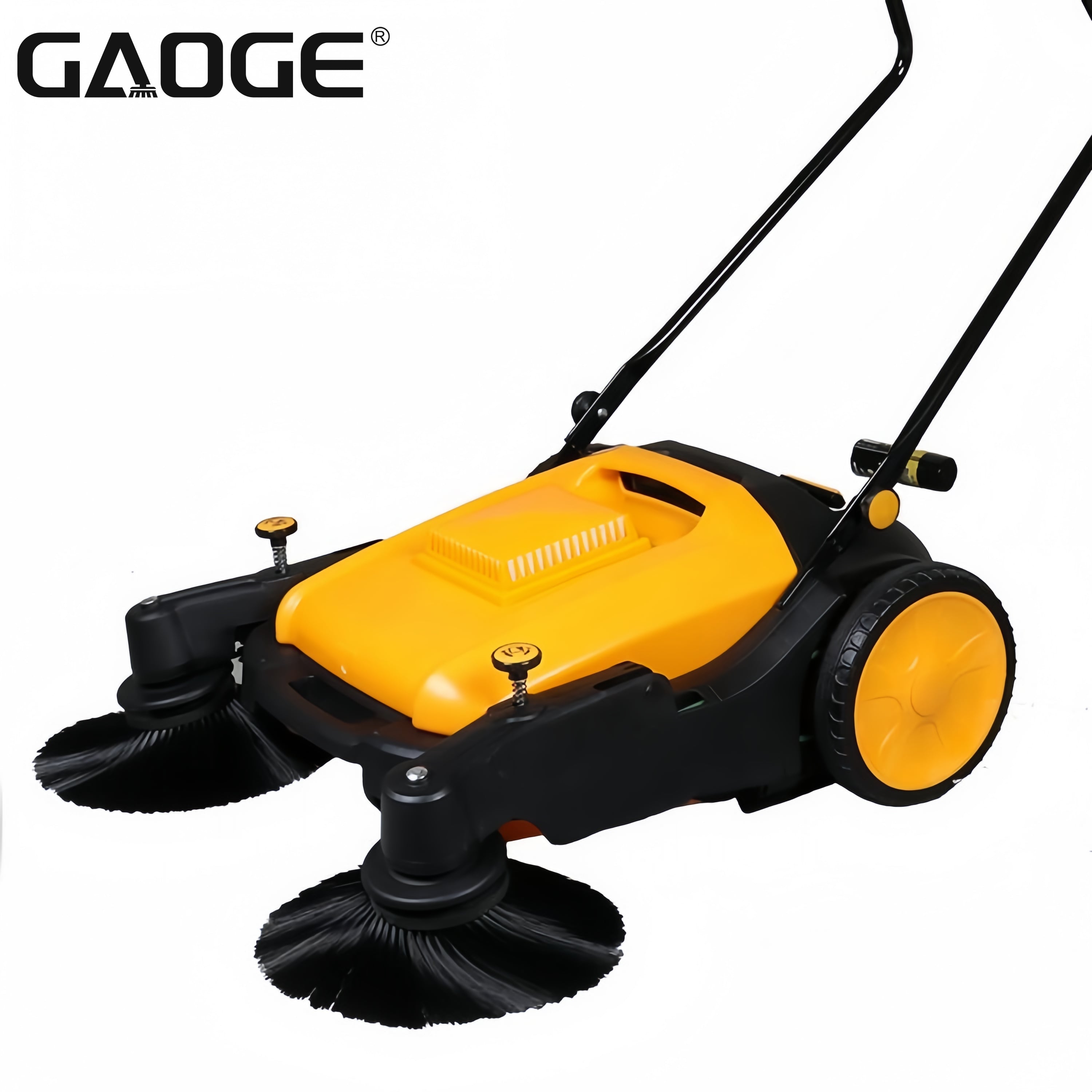
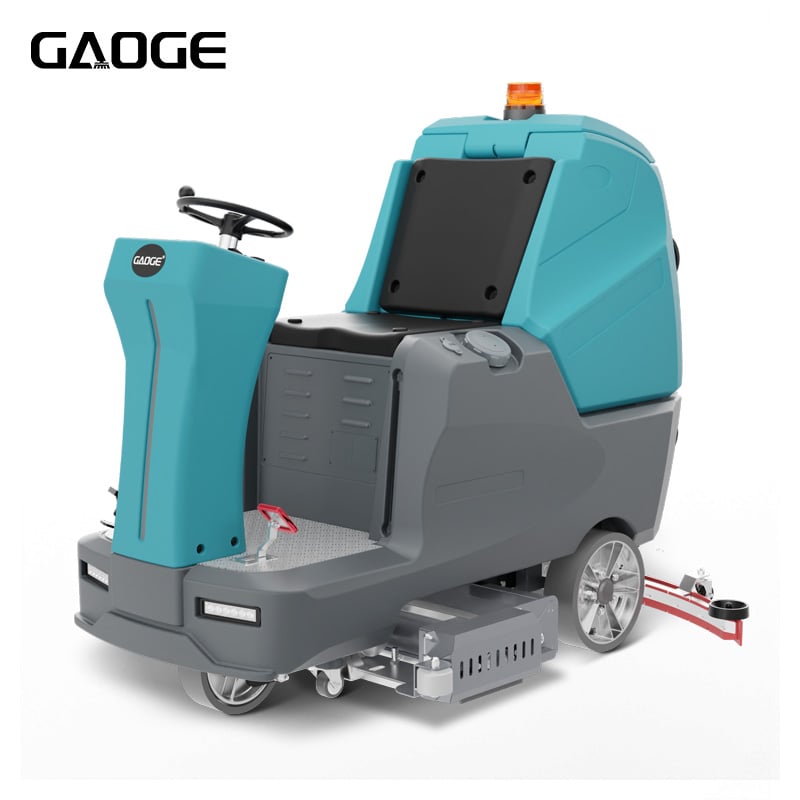
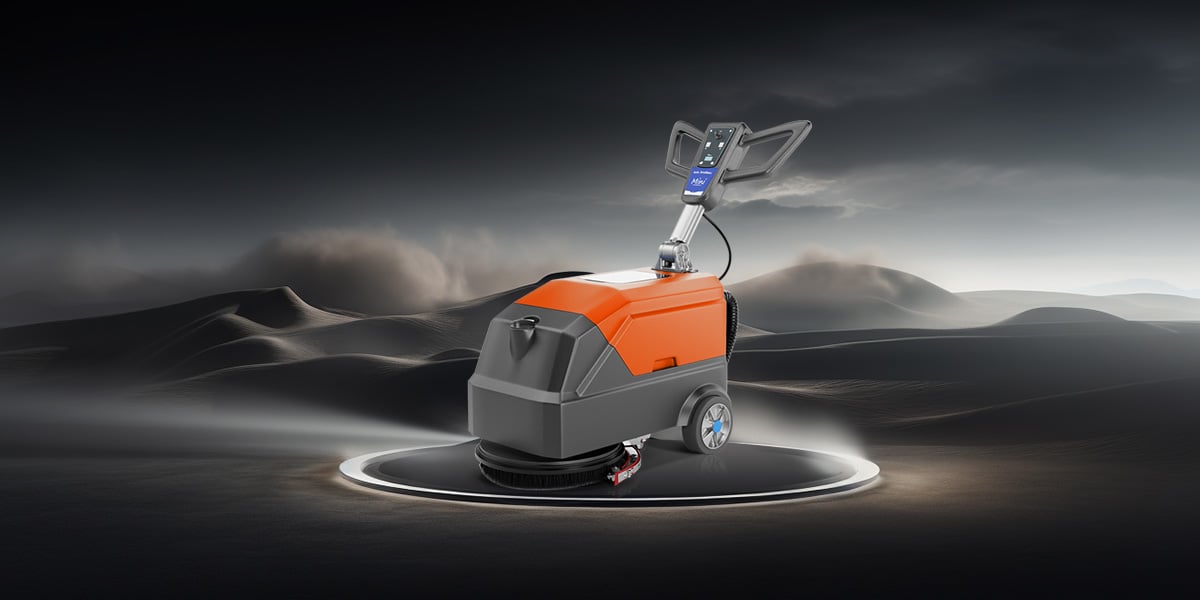
For many GAOGE floor scrubber models, customers can select the battery type according to their operating requirements, budget, cleaning frequency, and maintenance preferences.
Maintenance-free lead-acid batteries are widely used because of their mature technology and relatively lower initial cost.
Lithium batteries generally offer a longer cycle life, lower weight, and lower routine maintenance requirements.
There is no single battery type that is best for every user. The right choice depends on how frequently the machine will operate, how long each cleaning shift lasts, and how the battery will be charged and maintained.
There is no universal floor scrubber battery runtime.
Different machines use different battery capacities, voltages, motor powers, brush systems, cleaning widths, and drive systems.
Actual runtime can also change according to brush pressure, floor condition, cleaning speed, machine load, battery age, and how frequently the operator stops and restarts the machine.
For this reason, the runtime shown in a floor scrubber specification should normally be treated as an estimated operating reference rather than a guaranteed fixed value.
The same floor scrubber may achieve different working times under different operating conditions.
When comparing machines, buyers should not evaluate performance only by battery runtime.
Cleaning width, tank capacity, cleaning efficiency, battery capacity, and total cleaning area should be considered together.
A machine with a longer runtime is not necessarily more productive if its cleaning capacity is too small for the application.
Charging time also varies from one floor scrubber to another.
Different machines may use different battery capacities, battery voltages, charger outputs, and battery technologies.
A larger battery pack generally requires more charging energy than a smaller battery pack.
Therefore, there is no single charging time that applies to every floor scrubber.
The charger should always match the battery type, voltage, and charging specification recommended for the machine.
It is also not recommended to repeatedly run the battery completely empty before charging.
Frequent deep discharge can reduce the service life of both lead-acid and lithium batteries.
Battery service life can be considered in terms of both charging cycles and calendar life.
For many maintenance-free lead-acid floor scrubber batteries, approximately 300–500 charging cycles can be used as a practical reference.
Under normal operating and maintenance conditions, typical service life may be around 2–3 years.
For lithium batteries, approximately 1,500–2,500 charging cycles may be achievable under suitable conditions.
Depending on lithium battery chemistry, battery quality, charging habits, and operating conditions, the practical service life may commonly reach around 3–5 years or longer.
These figures are reference values rather than guaranteed battery life.
Actual results can vary significantly according to battery specification, operating frequency, discharge depth, temperature, charging habits, and storage conditions.
One important factor affecting floor scrubber battery life is Depth of Discharge, or DOD.
DOD describes how much of the available battery capacity is used before the battery is recharged.
Using only part of the available capacity before charging is considered a shallower discharge.
Running the battery almost completely empty is considered a deep discharge.
In general, repeated deep discharge places more stress on the battery and can reduce its useful cycle life.
This is why operators should not make a habit of running the floor scrubber until the battery is completely empty every time.
Charging before the battery reaches an extremely low state of charge can help reduce unnecessary battery stress.
In actual use, battery problems are often caused by charging and storage habits rather than normal battery aging alone.
One common problem is leaving the battery uncharged for a long period.
Even when the machine is not operating, the battery can gradually lose charge. If it remains at a very low state of charge for too long, it may become difficult to recover.
Another common mistake is repeatedly running the battery completely flat before charging.
Long-term machine storage without maintenance charging is also an important cause of premature battery failure.
Some customers use a floor scrubber only occasionally and may leave the machine unused for several months. If the battery is not checked or recharged during this period, it may become deeply discharged and eventually fail.
In many service situations, a battery fails not because it has reached its normal cycle life, but because the machine has been stored for too long without proper charging or maintenance.
Using the wrong charger can also damage the battery.
An unsuitable charger may cause incomplete charging, abnormal heating, overcharging, charging faults, or reduced battery life.
Temperature matters as well.
High temperatures can accelerate battery aging, especially during charging, while very low temperatures may temporarily reduce available battery capacity and charging efficiency.
If a floor scrubber will not be used for a long period, the lead-acid battery should be prepared correctly before storage.
Before storage, fully charge the battery and disconnect it from the machine according to the operating instructions.
Keep the battery surface and terminals clean and dry.
During long-term storage, the battery will gradually self-discharge.
As a practical maintenance reference, the battery can be recharged approximately every 15 days.
Store it in a cool, dry, ventilated area and avoid direct sunlight or nearby heat sources.
A storage environment above approximately 0°C is generally preferable.
The battery should also be checked periodically for swelling, leakage, terminal corrosion, or damaged connections.
Before returning the machine to service, inspect the battery and fully charge it again.
The basic principle is simple:
Fully charge before storage, disconnect correctly, and recharge periodically.
Lithium batteries require a different long-term storage strategy.
For extended storage, it is generally better to keep the battery at approximately 50%–70% state of charge.
Avoid storing a lithium battery completely full or completely discharged for a long period.
Where appropriate, the battery can be removed from the machine and stored separately.
The storage area should be dry and protected from direct sunlight, excessive heat, and moisture.
A practical storage temperature range may be approximately -5°C to 35°C, subject to the specific battery manufacturer's requirements.
Check the battery approximately every three months.
If the charge level has dropped significantly, recharge it back to around 50%–70%.
Before reuse, inspect the battery for swelling, deformation, leakage, or physical damage.
If the condition appears normal, fully charge the battery before returning it to service.
The main principle is:
Store lithium batteries partially charged and inspect them periodically.
Battery age alone should not determine whether replacement is necessary.
Actual runtime, charging behavior, battery condition, and machine performance are more useful indicators.
One of the clearest signs is a significant reduction in runtime.
If a machine previously completed a normal cleaning shift on one charge but now operates for only around half the previous time, and correct charging does not restore the performance, the usable battery capacity may have significantly declined.
Abnormal charging behavior is another warning sign.
A battery may need further inspection if it shows full charge very quickly but loses power soon afterward, takes much longer to charge than before, cannot reach full charge, becomes unusually hot during charging, or repeatedly triggers a charging error.
Machine performance under load is also important.
A battery may appear normal when the floor scrubber is idle, but its voltage may drop rapidly when the brush motor, vacuum motor, and drive system begin operating.
If mechanical and electrical faults have already been ruled out but the machine still shows weak driving power, unstable operation, rapid low-battery warnings, or sudden power loss, the battery may no longer be able to supply sufficient power under load.
Battery condition should also be checked visually.
If a battery shows swelling, deformation, leakage, cracked casing, severe terminal corrosion, or abnormal heating, continued use is not recommended.
These are not simply normal signs of battery aging.
They may indicate a safety-related problem and should be inspected by qualified personnel.
For lithium batteries in particular, swelling, leakage, or abnormal heat should be treated as a serious warning sign.
Maintenance-free lead-acid batteries are particularly sensitive to long periods in a discharged state, repeated deep discharge, poor storage, and long-term undercharging.
If a lead-acid battery remains at a low state of charge for too long, sulfation may develop and usable capacity may gradually decrease.
Lithium batteries generally provide a longer cycle life, but they can still be affected by high temperature, repeated deep discharge, unsuitable charging, improper long-term storage, cell imbalance, BMS faults, or individual cell problems.
For this reason, battery replacement decisions should be based on actual battery behavior rather than battery type alone.
A lithium battery charging fault does not always mean that the entire battery pack has failed.
In one real-world floor scrubber battery troubleshooting case, a machine that had been used for approximately two to three years began repeatedly reporting a charging fault.
Further inspection found a significant difference between individual cell voltages.
Five cells in the battery pack measured approximately 4.05V–4.06V, while one cell measured only approximately 3.36V.
This large voltage difference showed that the cells were no longer operating at a similar state of charge.
When one cell becomes significantly weaker than the others, the battery pack may no longer charge and discharge evenly.
The Battery Management System (BMS) may then activate protection or interrupt the charging process.
This case shows that what appears to be a charger problem may actually be caused by internal cell imbalance.
For professional service technicians, checking individual cell voltages can help determine whether the problem is related to one weak cell, cell imbalance, the BMS, or the complete battery pack.
A charging fault therefore does not always mean that the entire lithium battery pack must automatically be replaced.
Depending on battery design and service conditions, professional diagnosis or repair may sometimes be more economical than replacing the complete pack.
However, lithium battery packs should not be opened or repaired by untrained users.
If a lithium battery is swollen, leaking, unusually hot, physically damaged, or shows another serious abnormality, stop using it immediately and have it inspected or replaced by qualified personnel.
No.
A charging fault may also be related to the charger, electrical connections, wiring, BMS protection, cell imbalance, or one weak internal cell.
For this reason, battery troubleshooting should be systematic.
Before replacing an entire battery pack, qualified technicians should first determine whether the fault comes from the charger, electrical connection, BMS, individual cell, or complete battery pack.
However, safety should always come before repair cost.
If the battery is swollen, leaking, physically damaged, or repeatedly overheating, continued use is not recommended.
The most effective way to extend floor scrubber battery life is to develop good charging and storage habits.
Recharge the battery before it becomes completely empty, use the correct charger, follow the charging instructions provided with the machine and battery, keep the battery and terminals clean, and store the battery correctly when the machine will not be used for a long period.
Avoid excessive heat and investigate abnormal charging behavior early.
Most importantly, avoid repeatedly running the battery completely flat and do not leave the machine unused for months without checking or charging the battery.
Maintenance-free lead-acid batteries generally have a lower initial cost and are widely used in commercial floor scrubbers.
Their typical reference cycle life may be around 300–500 cycles, with practical service life commonly around 2–3 years under suitable conditions.
They are heavier and are more sensitive to long-term low-charge storage and repeated deep discharge.
Lithium batteries generally have a higher initial cost but can provide a longer cycle life and lower weight.
Typical reference cycle life may be around 1,500–2,500 cycles or more, depending on battery chemistry and quality.
Practical service life may commonly reach around 3–5 years or longer under suitable conditions.
Lithium batteries also require less routine maintenance, but correct charging, temperature control, and storage remain important.
Neither battery type is automatically the best choice for every customer.
The right option depends on operating frequency, cleaning schedule, maintenance preference, budget, and machine configuration.
The answer to “How long do floor scrubber batteries last?” depends on whether you are asking about runtime per charge or total battery service life.
There is no universal runtime because different floor scrubbers use different battery capacities, motors, machine sizes, and operating loads.
Maintenance-free lead-acid batteries commonly provide a few hundred charging cycles and around 2–3 years of practical service under suitable conditions.
Lithium batteries generally provide significantly more charging cycles and may remain in service for 3–5 years or longer under suitable conditions.
However, battery chemistry is only part of the answer.
Charging habits, depth of discharge, temperature, long-term storage, and correct charger selection can all have a major effect on battery life.
Battery replacement should therefore be based on actual runtime, charging behavior, physical condition, and machine performance rather than battery age alone.
GAOGE provides both maintenance-free lead-acid and lithium battery options for different commercial floor scrubber applications.
Customers can select the battery configuration according to the floor scrubber model, operating frequency, cleaning requirements, budget, and maintenance preference.
For battery selection, replacement advice, or technical troubleshooting, contact the GAOGE team for further support.
 Hot News
2026-09-11
2026-08-25
2026-05-01
2026-04-27
2026-03-06
2026-03-04



Gaoge factory support OEM and ODM , have kinds of cleaning equipment production lines with more than 10 years experience.Main products are mini floor scrubber ,walk behind floor scrubber ,ride on floor scrubber , sweep machine ......
Gaoqiao Industrial Park, Jingang Town,Suzhou, Jiangsu, China
Copyright © 2025 Zhangjiagang Gaoge Cleaning Equipment Co., Ltd.All rights reserved. Privacy Policy
 EN
EN